When a family first searches for "parkinson's assisted living," they usually aren't comparing care models yet — they're reacting to a crisis. A parent has fallen three times in a month. A spouse's medication timing has become impossible to manage alone. A neurologist has started using words like "safety risk" and "24-hour supervision." Standard assisted living communities are often the first option families tour, because they're familiar. But for Parkinson's disease, the differences between standard assisted living and specialized residential care can determine whether a loved one thrives or declines.
Why Standard Assisted Living Often Falls Short for Parkinson's
Parkinson's disease is not static. It is a progressive neurological condition that affects movement, balance, swallowing, cognition, and even blood pressure regulation. Care needs change month to month, sometimes week to week. That trajectory collides with the way most assisted living communities are designed and staffed.
Standard assisted living was built around a different resident: someone who needs help with bathing, dressing, meals, and reminders, but whose clinical needs remain relatively stable. Parkinson's residents rarely fit that profile. Their needs fluctuate across the day — strong at one moment, frozen at the next — and those fluctuations demand a level of clinical attention that a generalist care team may not be equipped to provide.
Medication Timing Demands Clinical Discipline
Few conditions depend on precise medication timing as much as Parkinson's disease. Levodopa and other dopaminergic medications must be given on a strict schedule, often every two to four hours, and a delayed dose can mean a sudden loss of mobility, increased tremor, or a painful "off" episode. In a busy assisted living facility where one medication aide may pass pills for dozens of residents, the window for a missed or late dose is wide. In specialized residential care, medication management is treated as a clinical protocol: doses on schedule, on/off periods tracked, adjustments coordinated with a neurologist, and dyskinesia recognized and documented.
Falls and "Freezing" Require More Than a Grab Bar
Parkinson's carries one of the highest fall rates of any chronic condition. Freezing of gait — the sensation that the feet are glued to the floor — can strike mid-step without warning, especially in doorways, hallways, and other narrow transitions. Standard assisted living communities install grab bars and call buttons; specialized Parkinson's care homes design for the condition. Caregivers trained in cueing and mobility support, low-bed configurations, step-free layouts, night lighting, and a resident-to-staff ratio that allows someone to be at the bedside within seconds. Fall prevention is not an amenity for Parkinson's residents — it is the difference between living at home and living after a hip fracture.
Staffing Ratios Determine Whether Help Arrives in Time
Ask any assisted living tour guide about staffing, and you will hear reassuring numbers. But ratios tell the real story only when you look at the whole building. A facility with 120 residents and one nurse on shift may report an excellent ratio on paper while caregivers respond to call lights in cycles of ten or fifteen minutes. In an adult family home like Edmonds Villa, licensed for just six residents, caregivers know every resident's baseline, notice the subtle early signs of a decline, and respond immediately. For a Parkinson's resident who cannot wait, that difference is everything.
Parkinson's Assisted Living: Standard Facility vs. Specialized Residential Care
The clearest way to understand your options is side by side. Standard assisted living and specialized Parkinson's residential care are both legitimate choices — they simply serve different residents at different stages. Here is how they compare on the dimensions that matter most for Parkinson's disease:
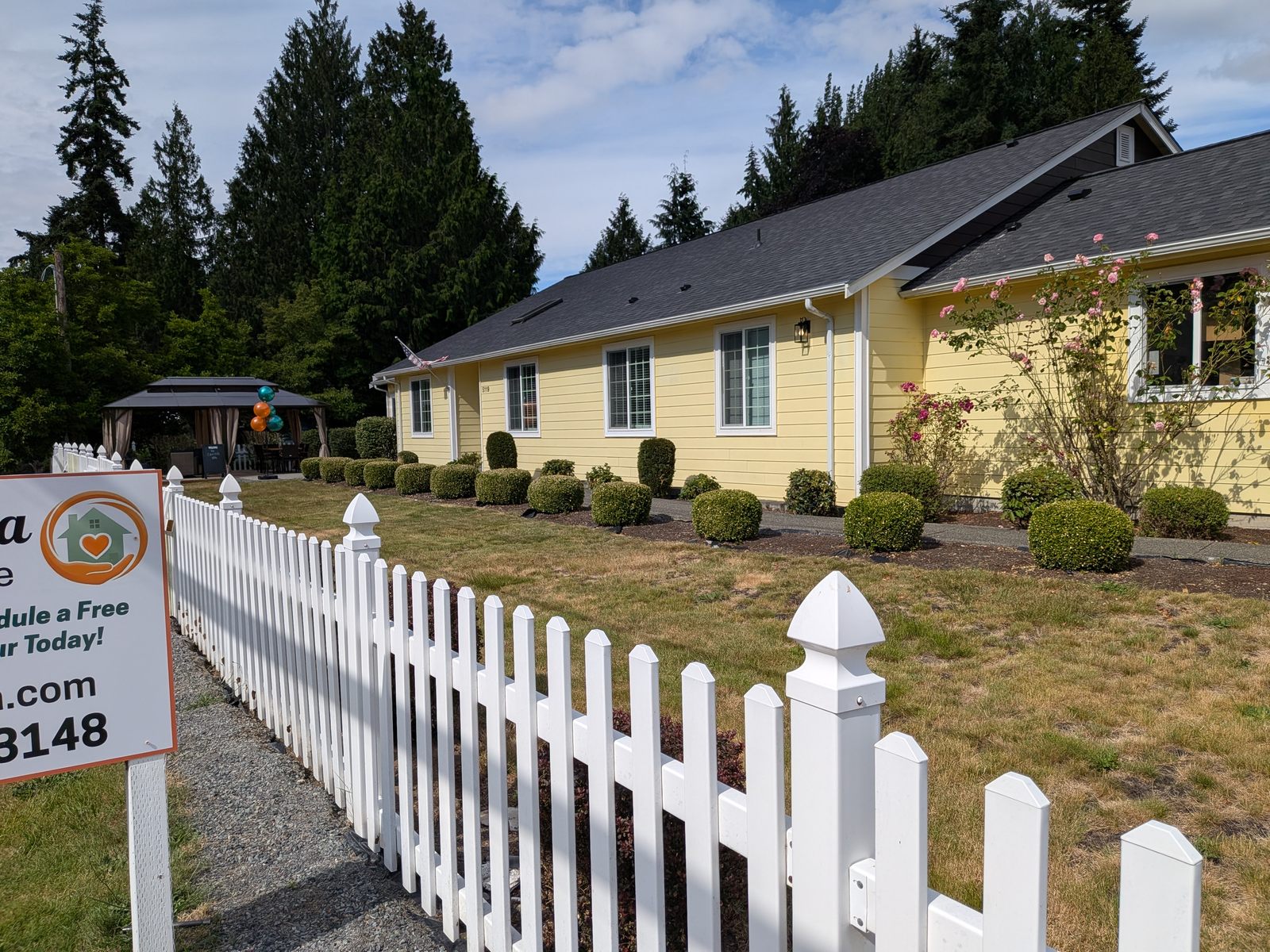
- Setting: Standard assisted living houses 40–200+ residents in an apartment-style building with shared dining and rotating staff. Specialized residential care in an adult family home houses up to six residents in a real single-family house with consistent caregivers.
- Staffing ratios: Assisted living staff may cover dozens of residents per shift. A small licensed home keeps a caregiver-to-resident ratio that allows help within seconds, not minutes.
- Medication management: General communities administer scheduled medications, but may lack the discipline or capacity for Parkinson's-specific timing protocols, on/off tracking, and neurologist coordination.
- Fall prevention: Standard buildings add grab bars and alarms. Specialized homes engineer the physical environment — step-free transitions, low beds, night lighting — and train staff in cueing and safe transfers.
- Cognitive support: Many Parkinson's residents also live with Parkinson's-related dementia, which requires training, patience, and consistent routine.
- Care trajectory: Assisted living often discharges residents when needs exceed the community's license. A high-acuity adult family home is built to continue caring for people whose conditions progress.
For many families, the deciding factor is not the brochure but the question of what happens when the disease progresses. Our high-acuity services at Edmonds Villa exist precisely for families who want a loved one to stay in one place, cared for by people who know them, rather than transfer between levels of care.
Wondering whether specialized Parkinson's care fits your family's situation? Talk with an RN who runs a licensed care home every day. Contact Edmonds Villa or call (425) 400-3184 to discuss your loved one's needs.
What Specialized Parkinson's Care Looks Like in Practice
Specialized Parkinson's care is not a marketing label; it is a set of concrete clinical practices. Families touring a home should look for evidence of each of the following.
Medication Management Protocols
Does the home have a written process for medication administration? Who is responsible for doses, and what happens if a dose is missed? Is there RN oversight? At Edmonds Villa, an RN-owned and operated home, medication management follows clinical protocols: timely administration, careful observation of on/off periods and dyskinesia, documentation, and communication with the prescribing neurologist. For Parkinson's residents, this level of discipline directly affects quality of life every single day.

Fall Prevention Infrastructure and Mobility Support
Look beyond the grab bars. Are there trip hazards? Are hallways clear of furniture that invites freezing episodes? Is the bed low enough for safe transfers? Are caregivers trained in gait cueing — techniques that help a frozen Parkinson's resident begin walking again? Edmonds Villa's home setting and trained care team provide mobility support that standard communities rarely match.
Consistent, Trained Caregivers
Parkinson's residents benefit enormously from consistency. The same caregiver who knows that morning stiffness peaks at nine, who recognizes the first signs of a urinary tract infection, or who knows exactly how to guide a freezing resident through a doorway, is irreplaceable. In a small home, consistency is built into the model. In a large facility, it is a matter of chance. Read more about how our approach to care works — from the first visit through daily routines.
How to Evaluate a Care Home for a Parkinson's Loved One
Whether you are choosing an assisted living community or a specialized residential care home, bring this checklist with you:
- Confirm an active DSHS license using the Residential Care Facility Search tool.
- Ask how many residents staff serve per shift — and watch what happens during a real shift, not just on a tour.
- Request the medication administration protocol and ask how missed or late doses are handled.
- Ask about fall history and what changed after every fall.
- Verify nursing oversight, and ask who coordinates with the neurologist.
- Ask about the transition plan: what happens if your loved one's needs increase?
- Visit at different times of day, including evenings and weekends.
Two authoritative resources can also guide your research: the Parkinson's Foundation publishes care guidance for families, and the National Institute on Aging maintains a detailed Parkinson's health overview. If you're still learning about the care model itself, our guide to what an adult family home is is a good place to start.
The Cost of Parkinson's Assisted Living in Washington State
Cost is often the first question, and it deserves an honest answer. Monthly costs for residential care in Washington State typically range from $4,500 to $9,000, depending on care level, room type, and location. Standard assisted living communities and RN-supervised high-acuity homes like Edmonds Villa both fall within a similar broad range, but specialized care often costs more because it delivers more: trained staff, clinical protocols, and a license that allows a higher level of care.
Payment options include private pay, the COPES Medicaid waiver for qualifying residents, VA Aid and Attendance benefits for veterans, and long-term care insurance. Families should also factor in the hidden costs of a wrong choice — a fall that leads to hospitalization, a medication error, or a second move when the first placement fails.
Edmonds Villa: High-Acuity Parkinson's Care in the Seattle Area
Located in Edmonds, Washington, Edmonds Villa is an RN-owned and operated high-acuity adult family home that serves as a genuine alternative to standard assisted living for Parkinson's residents. Where a facility spreads care across a hundred rooms, Edmonds Villa concentrates nurse-level care in a six-bed home. Where a general community trains staff in basics, our team is equipped for the clinical realities of Parkinson's disease: precise medication timing, fall prevention, dysphagia awareness, and the management of advancing symptoms.

Families in the greater Seattle area often find Edmonds Villa at the end of a long search — after a placement failed, after a fall, after a hospital discharge made returning to a standard community impossible. Contact us to schedule a tour and see whether our home is the right fit for your family.
Frequently Asked Questions
What is Parkinson's assisted living?
Parkinson's assisted living refers to residential care designed around the specific needs of people living with Parkinson's disease. In a standard assisted living facility, residents receive help with daily activities, but staff may not be trained in Parkinson's-specific challenges like medication timing, freezing episodes, and dysphagia. Specialized Parkinson's residential care adds clinical expertise, consistent staffing, and fall prevention infrastructure that standard communities often lack.
How is specialized Parkinson's care different from standard assisted living?
The differences come down to three things: staffing ratios, medication management, and fall prevention. Parkinson's residents often need help with fine-motor tasks at scheduled medication peaks, timed doses that cannot be missed, and proactive fall prevention. A home like Edmonds Villa keeps a low resident-to-caregiver ratio, follows strict medication protocols, and provides an environment designed for safe mobility — all in a licensed adult family home in Edmonds, Washington.
Can a Washington State adult family home care for someone with Parkinson's?
Yes. Under DSHS regulations, licensed adult family homes may provide personal care to up to six adults, and homes with RN supervision can manage higher-acuity needs, including advanced Parkinson's. Families should verify the home's license through the DSHS Residential Care Facility Search and ask whether the home has experience with medication timing, transfers, and falls specific to Parkinson's disease.
Why do staffing ratios matter for Parkinson's residents?
Parkinson's residents often need help at unpredictable moments — during a freezing episode, after a sudden change in medication effectiveness, or during a nighttime restroom trip. A low resident-to-staff ratio means help arrives within seconds rather than minutes. In a six-bed adult family home, caregivers know each resident's baseline, notice changes early, and respond faster than staff in a facility responsible for hundreds of residents.
What does Parkinson's medication management involve?
Parkinson's medications like levodopa require precise, sometimes multiple daily doses, because effectiveness can fluctuate and timing directly affects movement and quality of life. Proper medication management means giving doses on schedule, tracking on/off periods, recognizing dyskinesia, coordinating with a neurologist, and adjusting routines as the disease progresses. These are clinical tasks that require trained nursing oversight.
How much does Parkinson's residential care cost in Washington State?
Monthly costs for residential care in Washington typically range from $4,500 to $9,000 depending on care level, location, and the home. RN-supervised high-acuity homes like Edmonds Villa sit at the higher end because they deliver nurse-level Parkinson's care in a home setting. Families can pay privately, or use COPES Medicaid, VA Aid and Attendance benefits, and long-term care insurance.
The right setting changes everything. Parkinson's disease is complex, progressive, and demanding — and the residential setting that serves a resident well in year one may fail them in year three. Standard assisted living works for some people with Parkinson's; specialized residential care works for many more. For Seattle-area families looking for nurse-level Parkinson's care in a true home setting, Edmonds Villa offers a high-acuity alternative worth touring.