Neurological Disorders
in Edmonds
Edmonds Villa provides specialized neurological disorders for families from Edmonds and surrounding communities. Our location offers expert care in a comfortable, homelike environment.
Parkinson's Disease, and the Home That Can Care for It in Edmonds
Sandra, RN, owner and operator of Edmonds Villa, on what Parkinson's disease actually is, and what a home has to do to care for someone living with it.
Specialized Care for
Edmonds Families
Finding quality neurological disorders near Edmonds can be challenging. Many care facilities lack the specialized equipment, trained staff, or experience to serve high-acuity patients effectively. Edmonds Villa fills this gap with dedicated neurological disorders services in our 6-bed adult family home.
Located in Edmonds, we serve families from Edmonds and throughout South Snohomish County and North King County. Our specialized focus means your loved one receives expert care from staff who understand their specific needs.
Neurological conditions like Parkinson's disease, ALS, MS, and traumatic brain injuries present unique care challenges. The National Institute of Neurological Disorders and Stroke emphasizes the importance of specialized, coordinated care for these complex conditions.
Discuss Your Needs →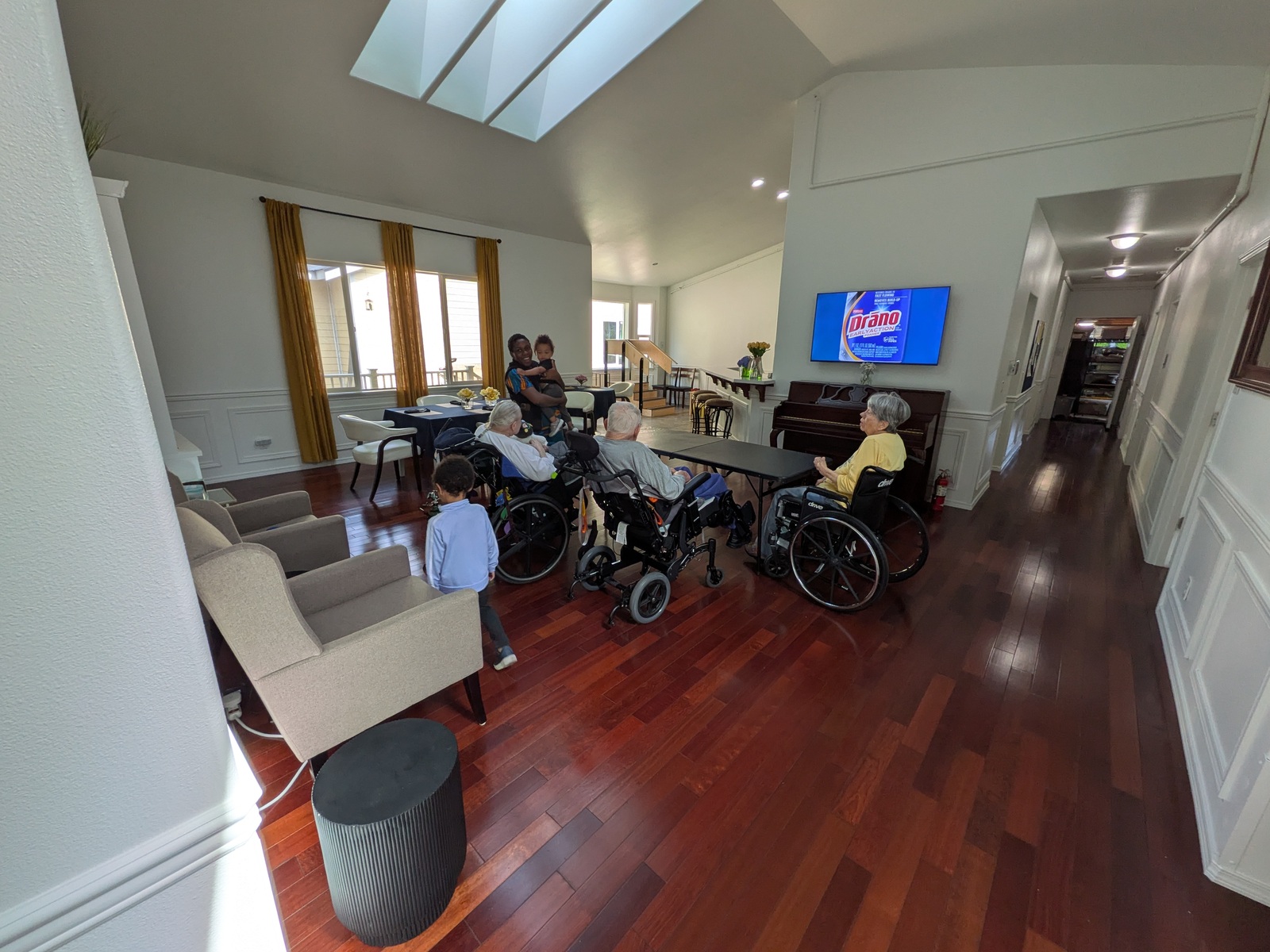
Home Setting
Why Edmonds Families Choose Edmonds Villa
The National Institute on Aging recommends evaluating care quality alongside location when choosing facilities
Specialized Expertise
Trained staff with specific expertise in neurological disorders that many facilities cannot provide.
Personalized Attention
With just 6 beds, your loved one receives individualized care from consistent caregivers.
Nursing Oversight
Licensed nurses provide medical supervision, medication management, and physician coordination.
Home Environment
A real home with home-cooked meals, comfortable spaces, and dignified living—not an institution.
Local Care
Serving the Edmonds community with compassionate, accessible care.
24/7 Care
Round-the-clock care and supervision with prompt response to any needs or concerns.
Additional Services for Edmonds Families
In addition to neurological disorders, Edmonds Villa provides comprehensive high-acuity care
Many residents have multiple care needs. Our integrated approach addresses all conditions while preventing conflicts between treatments. We also serve Edmonds families with:
- Bariatric Care - Specialized equipment and dignified care for patients with obesity
- Dialysis Support - PD and HHD support with trained staff
- Enteral Feeding - J-tube and G-tube management
- Neurological Care - Parkinson's, ALS, MS, and TBI support
- Heart & Lung Care - Cardiovascular and pulmonary management
- Complex Metabolic Care - Diabetes, arthritis, and bedridden care
- Oncology and Cancer Management - Specialized cancer care and management
According to Washington State DSHS, adult family homes provide residential care in a home setting. Edmonds Villa takes this further with specialized high-acuity capabilities.
Neurological Care in Edmonds: Parkinson's, ALS, MS, and TBI
Medication Timing in Parkinson's Disease
In Parkinson's disease, the clock is part of the prescription. Levodopa doses spaced too far apart bring back rigidity and tremor, and doses given late can leave a resident frozen mid-morning with no explanation. At Edmonds Villa, Parkinson's medications are given at fixed intervals, and the kitchen schedule is built around them so a dose is never held because a meal is running behind.
Staff learn each resident's off periods, the stretches when movement gets slow and stiff before the next dose is due. Those patterns are written into the care plan and shared with the physician, because adjusting timing is often more useful than raising a dose. Protein timing at meals is monitored too, since a heavy protein load can blunt how well a dose works for some people.
Progressive Conditions: ALS and Multiple Sclerosis
ALS and MS ask a different kind of planning. Neither follows a straight line, and the care plan has to move with the person rather than ahead of them. For residents with ALS, we watch breathing and swallowing closely, coordinate with the physician on non-invasive ventilation when it is appropriate, and adapt communication as speech changes, using writing, gestures, or a device the family brings.
Multiple sclerosis brings its own rhythm of good days and hard ones. Heat can drain strength quickly, so bathing and activity are scheduled when a resident is coolest and most capable. Bladder and bowel routines are managed deliberately, since urgency and retention are common and can escalate into infection fast. Fatigue in MS is not the ordinary tiredness of a long day, and treating it as laziness or low mood is a mistake families sometimes encounter elsewhere.
Seizure Precautions and Traumatic Brain Injury
For residents with a seizure history, staff are trained in what to do and what not to do: protect the head, turn the person on their side, time the event, and never put anything in the mouth. Rescue medication is kept where staff can reach it immediately, and a seizure that lasts longer than the threshold the physician set means a call for emergency help. Observations are documented in detail, because the pattern of seizures guides treatment.
Traumatic brain injury is often invisible. A resident may walk unaided and still struggle with impulse control, memory, or sudden frustration. Staff are trained to redirect rather than confront, keep routines predictable, and reduce noise and crowding when someone is overwhelmed. Behavioral changes after a brain injury are a symptom of the injury, not a personality flaw.
Swallowing, Contractures, and Cognitive Support
Dysphagia raises the risk of choking and aspiration, so textures and liquid thicknesses follow the speech-language pathologist's recommendations, and residents are seated upright and unhurried at meals. Positioning and daily range-of-motion work keep joints from tightening into contractures, and splints or supports are used when they have been ordered.
Cognitive changes may come from the same disease or from something treatable, such as dehydration, infection, or a medication side effect, so a sudden shift in alertness gets evaluated rather than accepted. Families are welcome to join walks along the downtown Edmonds waterfront and to ride over on the ferry for a visit, because familiar faces and a change of scenery do more for a person's orientation than any activity calendar.
The Parkinson's Foundation and the Alzheimer's Association both offer family education and helplines, and we encourage relatives to use them. Understanding the disease at home makes the visits easier and the decisions clearer.
Neurological Disorders FAQs
Does Edmonds Villa provide neurological disorders for Edmonds residents?
Yes. Edmonds Villa serves families from Edmonds and throughout the region with specialized neurological disorders. Our location is convenient for local families.
How far is Edmonds Villa from Edmonds?
Edmonds Villa is located in Edmonds, WA. Our central location makes it easy for Edmonds families to visit regularly.
What makes Edmonds Villa's neurological disorders different?
Our 6-bed adult family home provides personalized attention that larger facilities cannot match. Residents receive consistent care from staff who know them well, with specialized training in neurological disorders.
Can Edmonds families tour Edmonds Villa?
Absolutely. We welcome families from Edmonds to tour our facility, meet our caregivers, and learn about our neurological disorders services. Call (425) 400-3184 to schedule.
Does Edmonds Villa accept Medicaid for neurological disorders?
We work with various payment options including private pay and some Medicaid programs. Contact us to discuss your specific situation and financial options for neurological disorders.
Schedule a Tour
Edmonds families are welcome to visit Edmonds Villa. See our facility and learn how we can provide neurological disorders for your loved one.