Neurological Disorders
Near Everett
Edmonds Villa provides specialized neurological disorders for families from Everett and surrounding communities. Our Edmonds location offers expert care in a comfortable, homelike environment.
Parkinson's Disease, and the Home That Can Care for It in Everett
Sandra, RN, owner and operator of Edmonds Villa, on what Parkinson's disease actually is, and what a home has to do to care for someone living with it.
Specialized Care for
Everett Families
Finding quality neurological disorders near Everett can be challenging. Many care facilities lack the specialized equipment, trained staff, or experience to serve high-acuity patients effectively. Edmonds Villa fills this gap with dedicated neurological disorders services in our 6-bed adult family home.
Located in Edmonds, we serve families from Everett and throughout South Snohomish County and North King County. Our specialized focus means your loved one receives expert care from staff who understand their specific needs.
Neurological conditions like Parkinson's disease, ALS, MS, and traumatic brain injuries present unique care challenges. The National Institute of Neurological Disorders and Stroke emphasizes the importance of specialized, coordinated care for these complex conditions.
Discuss Your Needs →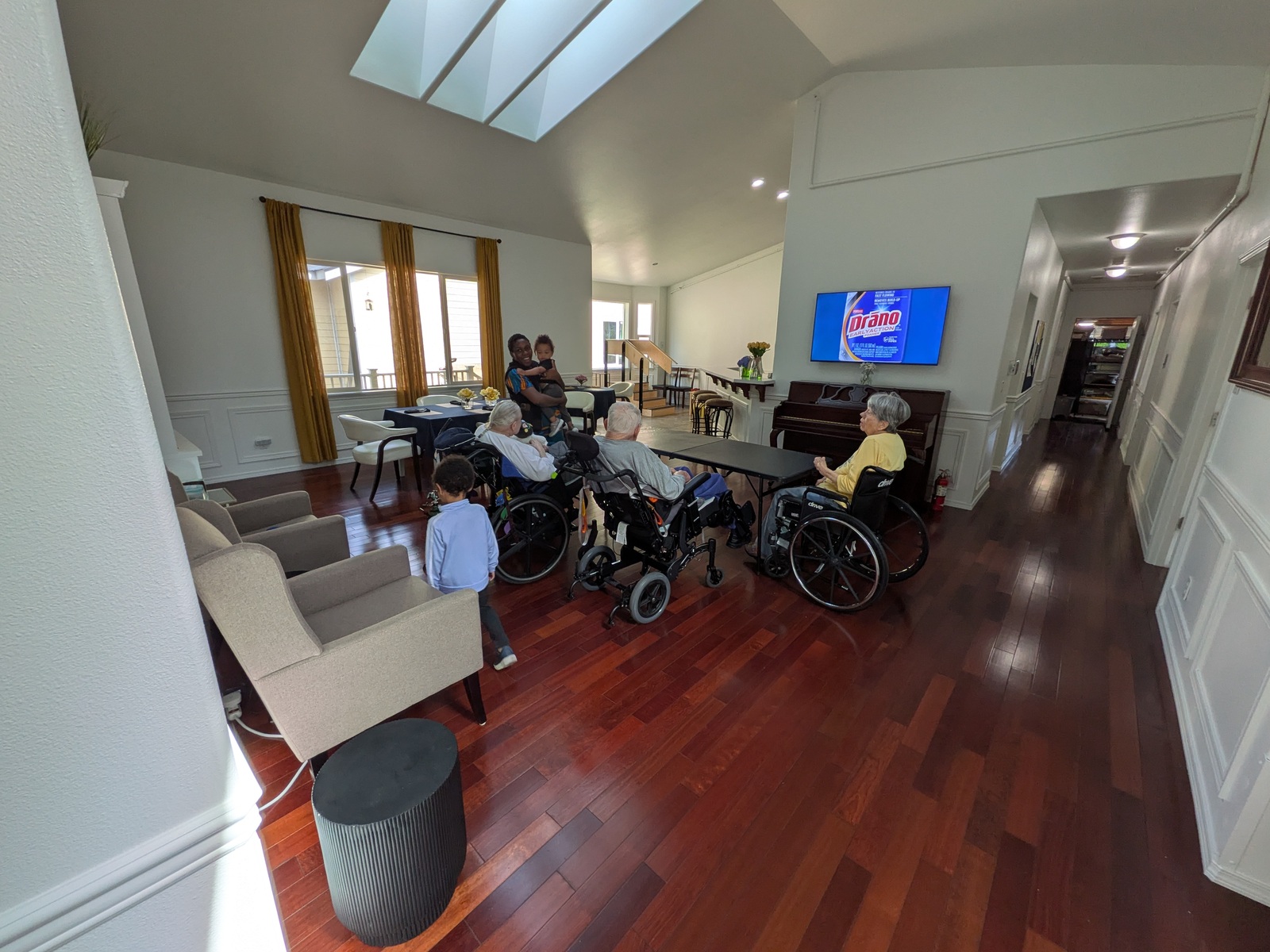
Home Setting
Why Everett Families Choose Edmonds Villa
The National Institute on Aging recommends evaluating care quality alongside location when choosing facilities
Specialized Expertise
Trained staff with specific expertise in neurological disorders that many facilities cannot provide.
Personalized Attention
With just 6 beds, your loved one receives individualized care from consistent caregivers.
Nursing Oversight
Licensed nurses provide medical supervision, medication management, and physician coordination.
Home Environment
A real home with home-cooked meals, comfortable spaces, and dignified living—not an institution.
Convenient Location
Easy access from Everett makes regular family visits convenient.
24/7 Care
Round-the-clock care and supervision with prompt response to any needs or concerns.
Additional Services for Everett Families
In addition to neurological disorders, Edmonds Villa provides comprehensive high-acuity care
Many residents have multiple care needs. Our integrated approach addresses all conditions while preventing conflicts between treatments. We also serve Everett families with:
- Bariatric Care - Specialized equipment and dignified care for patients with obesity
- Dialysis Support - PD and HHD support with trained staff
- Enteral Feeding - J-tube and G-tube management
- Neurological Care - Parkinson's, ALS, MS, and TBI support
- Heart & Lung Care - Cardiovascular and pulmonary management
- Complex Metabolic Care - Diabetes, arthritis, and bedridden care
- Oncology and Cancer Management - Specialized cancer care and management
According to Washington State DSHS, adult family homes provide residential care in a home setting. Edmonds Villa takes this further with specialized high-acuity capabilities.
Neurological Care for Everett Residents
Neurological conditions change the rules of ordinary caregiving. A pill given an hour late, a swallow that has quietly become unsafe, a shoulder that has stopped being moved through its full range: each of these turns into a crisis later if nobody is watching for it now. Our job is to keep the details steady while the condition itself keeps moving.
Parkinson's Medication Timing Is the Whole Game
Carbidopa-levodopa works on a schedule, and a dose that arrives late can leave a resident frozen and unable to walk within the hour. Doses here go out at fixed times, and no one waits for a convenient moment. Protein at meals can compete with the medication's absorption, so the timing of the largest protein serving of the day is set with the prescriber's guidance rather than by appetite alone. We also note "off" periods, the stretches when movement slows or tremor worsens, since a written pattern is what lets a neurologist fine-tune the regimen. The Parkinson's Foundation has plain-language guidance on why timing matters more than families expect.
ALS, MS, and a Moving Baseline
With ALS, strength and speech change gradually, so the measure is not today's ability but whether it slipped from last month. We adapt equipment as that baseline shifts, before a fall teaches the lesson. Multiple sclerosis brings its own pattern: heat can drain energy quickly, so a warm bath or a hot afternoon needs planning, and fatigue often arrives without warning. Bladder urgency is common in MS and gets managed with a toileting schedule rather than a wait-and-see approach.
Seizure Precautions and Swallowing Safety
For residents with a seizure history or a traumatic brain injury, we keep a written seizure record with time, duration, and what the episode looked like, because that log is what guides medication changes. Rescue medication stays stocked and within reach, and the room is arranged to reduce injury during a seizure. Swallowing is assessed before it becomes a problem: coughing or a wet voice at meals triggers a texture change, and residents who need thickened liquids get them without a debate. The Alzheimer's Association offers guidance on swallowing changes and on the behavioral shifts that come with cognitive decline.
Contractures, Positioning, and Behavioral Support
Limbs that are not moved through their full range will tighten, and a contracture that forms is very hard to undo. Range-of-motion work happens on a schedule, with splints or hand rolls used where the care plan calls for them and repositioning every few hours to protect skin and joints. Behavior is treated as communication rather than defiance; a resident who becomes agitated in the late afternoon may be in pain, overstimulated, or simply exhausted. We look for the cause before reaching for a solution.
Communication deserves the same planning. When speech becomes effortful, we slow down, ask one question at a time, and give the resident room to answer with a nod, a board, or a device instead of finishing the sentence for them. Preserving someone's ability to make choices about their own day is part of the care, not a courtesy.
Keeping Everett Families Connected
Many of our residents still see neurology at Providence Regional Medical Center Everett, and some families ride the Sounder or Amtrak Cascades into Everett Station from the south to visit. The drive down I-5 through exits 192 to 198 takes roughly 30 minutes, and we are happy to schedule therapy or appointment days so they line up with the visits that matter most to you.
Neurological Disorders FAQs
Does Edmonds Villa provide neurological disorders for Everett residents?
Yes. Edmonds Villa serves families from Everett and throughout the region with specialized neurological disorders. Our Edmonds location is conveniently accessible from Everett.
How far is Edmonds Villa from Everett?
Edmonds Villa is located in Edmonds, WA, just a short drive from Everett. Our central location makes it easy for Everett families to visit regularly.
What makes Edmonds Villa's neurological disorders different?
Our 6-bed adult family home provides personalized attention that larger facilities cannot match. Residents receive consistent care from staff who know them well, with specialized training in neurological disorders.
Can Everett families tour Edmonds Villa?
Absolutely. We welcome families from Everett to tour our facility, meet our caregivers, and learn about our neurological disorders services. Call (425) 400-3184 to schedule.
Does Edmonds Villa accept Medicaid for neurological disorders?
We work with various payment options including private pay and some Medicaid programs. Contact us to discuss your specific situation and financial options for neurological disorders.
Schedule a Tour
Everett families are welcome to visit Edmonds Villa. See our facility and learn how we can provide neurological disorders for your loved one.