Enteral Feeding & TPN
Near Lynnwood
Edmonds Villa provides specialized enteral feeding and Total Parenteral Nutrition (TPN) for families from Lynnwood and surrounding communities. Our Edmonds location offers expert care in a comfortable, homelike environment.
Specialized Care for
Lynnwood Families
Finding quality enteral feeding and Total Parenteral Nutrition (TPN) near Lynnwood can be challenging. Many care facilities lack the specialized equipment, trained staff, or experience to serve high-acuity patients effectively. Edmonds Villa fills this gap with dedicated enteral feeding and Total Parenteral Nutrition (TPN) services in our 6-bed adult family home.
Located in Edmonds, we serve families from Lynnwood and throughout South Snohomish County and North King County. Our specialized focus means your loved one receives expert care from staff who understand their specific needs.
Enteral feeding through G-tubes and J-tubes provides essential nutrition for patients who cannot safely eat by mouth or need supplemental nutrition. According to the American Society for Parenteral and Enteral Nutrition (ASPEN), proper tube feeding management requires trained caregivers and consistent protocols.
Discuss Your Needs →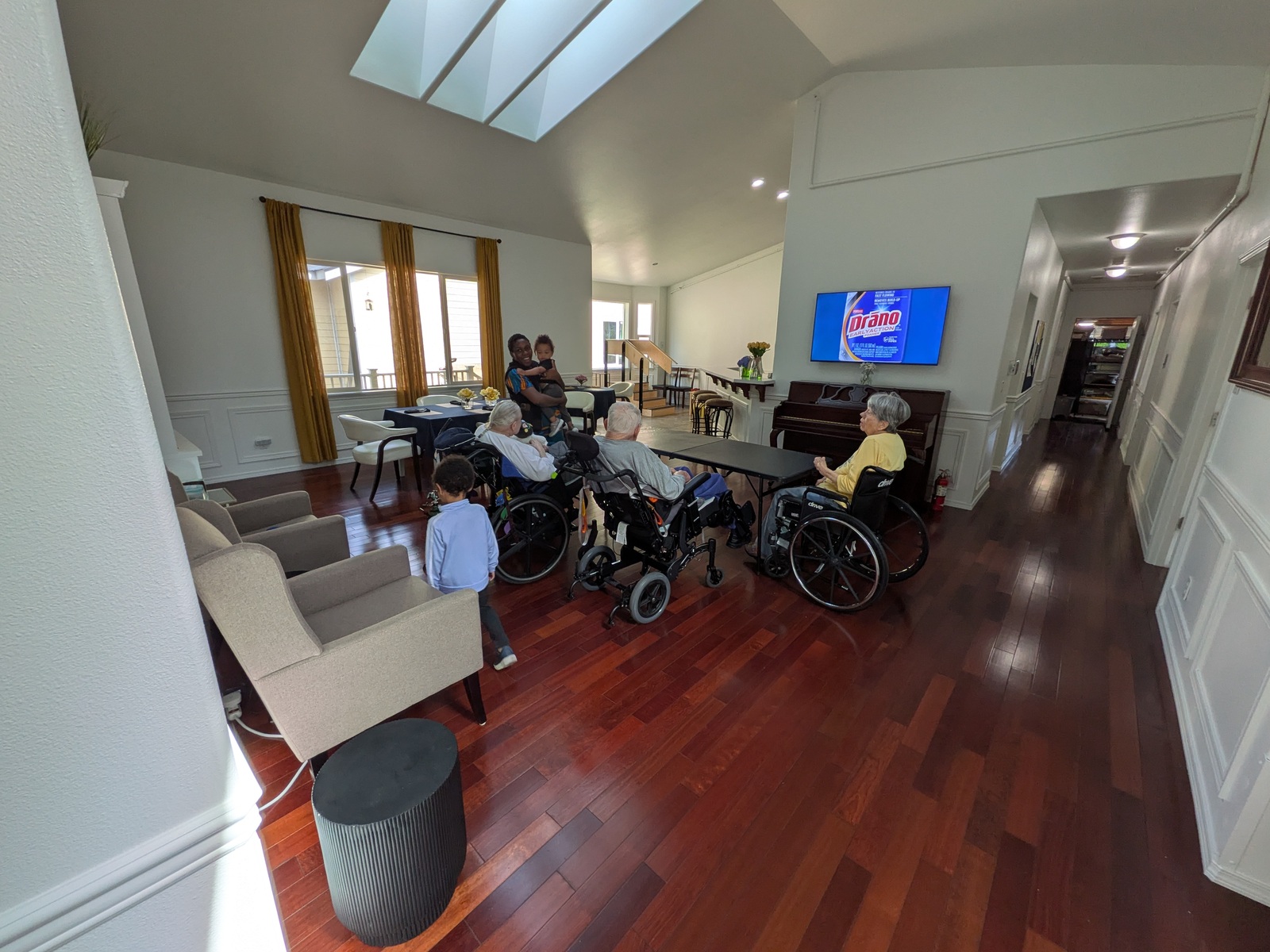
Home Setting
Why Lynnwood Families Choose Edmonds Villa
The National Institute on Aging recommends evaluating care quality alongside location when choosing facilities
Specialized Expertise
Trained staff with specific expertise in enteral feeding and Total Parenteral Nutrition (TPN) that many facilities cannot provide.
Personalized Attention
With just 6 beds, your loved one receives individualized care from consistent caregivers.
Nursing Oversight
Licensed nurses provide medical supervision, medication management, and physician coordination.
Home Environment
A real home with home-cooked meals, comfortable spaces, and dignified living—not an institution.
Convenient Location
Easy access from Lynnwood makes regular family visits convenient.
24/7 Care
Round-the-clock care and supervision with prompt response to any needs or concerns.
Additional Services for Lynnwood Families
In addition to enteral feeding and Total Parenteral Nutrition (TPN), Edmonds Villa provides comprehensive high-acuity care
Many residents have multiple care needs. Our integrated approach addresses all conditions while preventing conflicts between treatments. We also serve Lynnwood families with:
- Bariatric Care - Specialized equipment and dignified care for patients with obesity
- Dialysis Support - PD and HHD support with trained staff
- Enteral Feeding & TPN - J-tube and G-tube management
- Neurological Care - Parkinson's, ALS, MS, and TBI support
- Heart & Lung Care - Cardiovascular and pulmonary management
- Complex Metabolic Care - Diabetes, arthritis, and bedridden care
- Oncology and Cancer Management - Specialized cancer care and management
According to Washington State DSHS, adult family homes provide residential care in a home setting. Edmonds Villa takes this further with specialized high-acuity capabilities.
Tube Feeding and TPN Support for Lynnwood Residents
A feeding tube changes how a household thinks about meals, and it changes the risks that have to be managed every day. Formula that goes in too fast can be aspirated. A tube that is not flushed properly clogs, and a clogged tube can mean a trip to have it replaced. A stoma site that is not checked can become infected before anyone notices. None of this is difficult when it is done the same careful way each time, which is exactly why consistency matters more here than in almost any other kind of care.
We are in Edmonds, and Lynnwood families connect to us easily through the Lynnwood Transit Center or by car along the nearby arterials. Families who are managing a tube feeding at home before a placement often find the supply runs and the appointment schedule exhausting long before the medical part becomes hard.
G-Tubes, J-Tubes, and Why the Difference Matters
A gastrostomy tube delivers formula directly into the stomach, which lets the body use its normal digestion. A jejunostomy tube bypasses the stomach and feeds into the small intestine, and it is chosen when the stomach empties too slowly or when reflux and aspiration are a serious concern. The two are not interchangeable. A J-tube usually requires a slower, more continuous rate and often cannot tolerate a large bolus, and we plan the schedule around which tube the resident actually has.
Pump Feeding Versus Bolus Feeding
Bolus feeding gives a measured volume over a short period, several times a day, and it suits residents who tolerate volume and who benefit from a routine that resembles meals. Pump feeding runs continuously or in cycles over many hours, and it is gentler for residents with slow emptying or a J-tube. We hang formula no longer than the manufacturer allows, keep the pump clean, and check that the rate on the pump matches the order on the chart.
Aspiration Precautions at Every Feed
Silent aspiration does not announce itself with coughing, so we rely on positioning and routine. The head of the bed stays elevated during the feed and for a period after it, and we check for residual volume when the physician orders it. A resident who becomes short of breath, develops a fever, or changes color during or after a feed is evaluated rather than watched. Oral care is not skipped for residents who eat nothing by mouth, because the bacteria in the mouth are the ones that cause trouble in the lungs.
Flushes, Medications, and Stoma Site Care
Every medication given through a tube is crushed or in liquid form as appropriate and flushed separately, because medications that meet inside a tube are what create most clogs. We flush before and after each feed and each medication with the volume ordered. The stoma site is checked daily for redness, drainage, tenderness, or granulation tissue, and the tube's external length is recorded so a migration is caught early. The American Society for Parenteral and Enteral Nutrition publishes clinical guidance on tube feeding safety, and the National Institute on Aging offers plain-language material families can read together.
TPN and Hydration Support
Total parenteral nutrition bypasses the gut entirely and runs through a central line, which raises the stakes considerably: the line must stay sterile, the bag must be handled on its own schedule, and the infusion cannot be rushed or stopped abruptly. When a resident is on TPN we coordinate delivery, storage, and infusion times with the prescribing team and the home infusion pharmacy, and we watch for the fluid shifts that come with it. Hydration is tracked alongside nutrition, because a resident can be well fed and still dehydrated.
Enteral Feeding & TPN FAQs
Does Edmonds Villa provide enteral feeding and Total Parenteral Nutrition (TPN) for Lynnwood residents?
Yes. Edmonds Villa serves families from Lynnwood and throughout the region with specialized enteral feeding and Total Parenteral Nutrition (TPN). Our Edmonds location is conveniently accessible from Lynnwood.
How far is Edmonds Villa from Lynnwood?
Edmonds Villa is located in Edmonds, WA, just a short drive from Lynnwood. Our central location makes it easy for Lynnwood families to visit regularly.
What makes Edmonds Villa's enteral feeding and Total Parenteral Nutrition (TPN) different?
Our 6-bed adult family home provides personalized attention that larger facilities cannot match. Residents receive consistent care from staff who know them well, with specialized training in enteral feeding and Total Parenteral Nutrition (TPN).
Can Lynnwood families tour Edmonds Villa?
Absolutely. We welcome families from Lynnwood to tour our facility, meet our caregivers, and learn about our enteral feeding and Total Parenteral Nutrition (TPN) services. Call (425) 400-3184 to schedule.
Does Edmonds Villa accept Medicaid for enteral feeding and Total Parenteral Nutrition (TPN)?
We work with various payment options including private pay and some Medicaid programs. Contact us to discuss your specific situation and financial options for enteral feeding and Total Parenteral Nutrition (TPN).
Schedule a Tour
Lynnwood families are welcome to visit Edmonds Villa. See our facility and learn how we can provide enteral feeding and Total Parenteral Nutrition (TPN) for your loved one.