Neurological Disorders
Near North Seattle
Edmonds Villa provides specialized neurological disorders for families from North Seattle and surrounding communities. Our Edmonds location offers expert care in a comfortable, homelike environment.
Parkinson's Disease, and the Home That Can Care for It in North Seattle
Sandra, RN, owner and operator of Edmonds Villa, on what Parkinson's disease actually is, and what a home has to do to care for someone living with it.
Specialized Care for
North Seattle Families
Finding quality neurological disorders near North Seattle can be challenging. Many care facilities lack the specialized equipment, trained staff, or experience to serve high-acuity patients effectively. Edmonds Villa fills this gap with dedicated neurological disorders services in our 6-bed adult family home.
Located in Edmonds, we serve families from North Seattle and throughout South Snohomish County and North King County. Our specialized focus means your loved one receives expert care from staff who understand their specific needs.
Neurological conditions like Parkinson's disease, ALS, MS, and traumatic brain injuries present unique care challenges. The National Institute of Neurological Disorders and Stroke emphasizes the importance of specialized, coordinated care for these complex conditions.
Discuss Your Needs →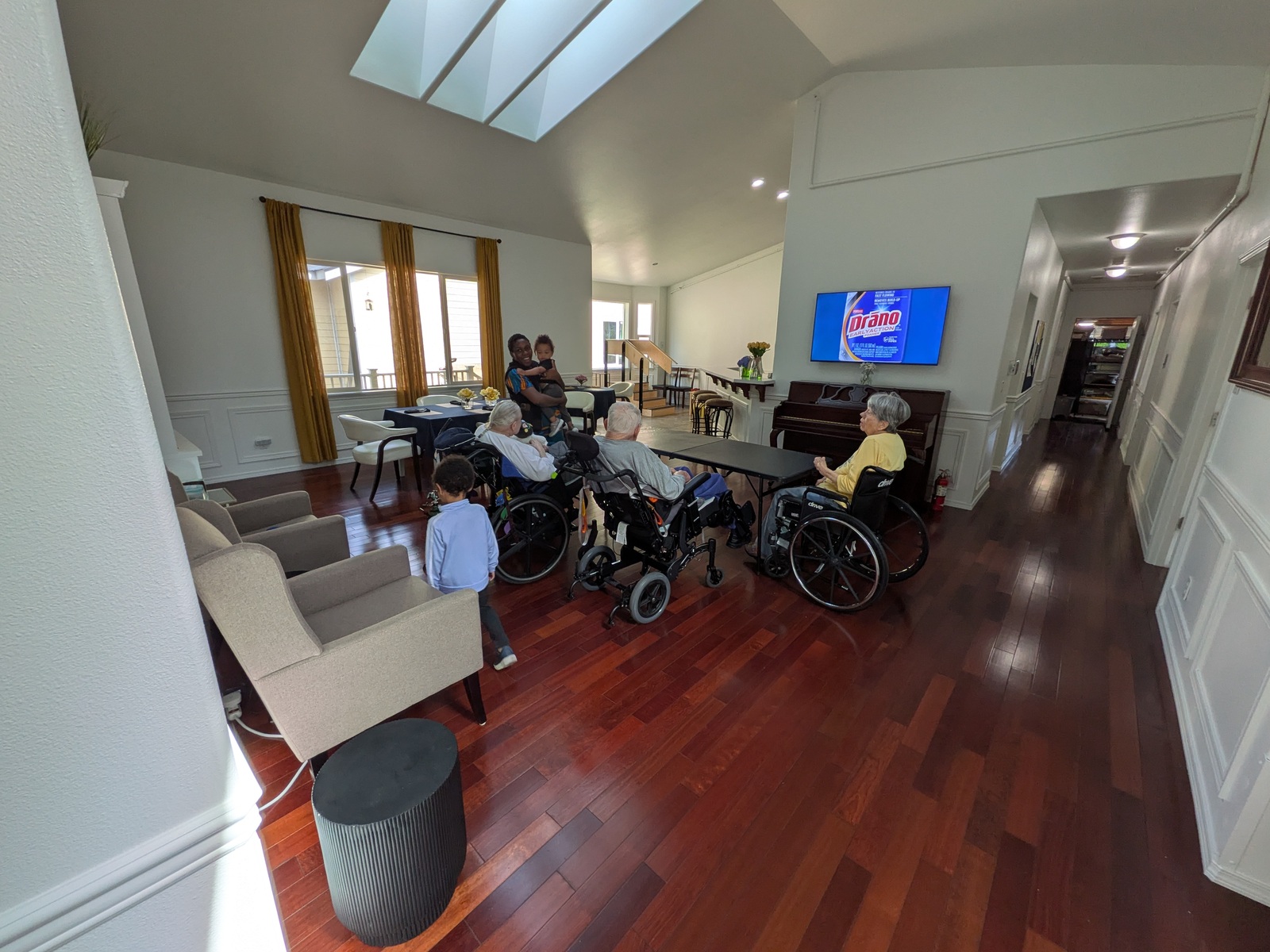
Home Setting
Why North Seattle Families Choose Edmonds Villa
The National Institute on Aging recommends evaluating care quality alongside location when choosing facilities
Specialized Expertise
Trained staff with specific expertise in neurological disorders that many facilities cannot provide.
Personalized Attention
With just 6 beds, your loved one receives individualized care from consistent caregivers.
Nursing Oversight
Licensed nurses provide medical supervision, medication management, and physician coordination.
Home Environment
A real home with home-cooked meals, comfortable spaces, and dignified living—not an institution.
Convenient Location
Easy access from North Seattle makes regular family visits convenient.
24/7 Care
Round-the-clock care and supervision with prompt response to any needs or concerns.
Additional Services for North Seattle Families
In addition to neurological disorders, Edmonds Villa provides comprehensive high-acuity care
Many residents have multiple care needs. Our integrated approach addresses all conditions while preventing conflicts between treatments. We also serve North Seattle families with:
- Bariatric Care - Specialized equipment and dignified care for patients with obesity
- Dialysis Support - PD and HHD support with trained staff
- Enteral Feeding - J-tube and G-tube management
- Neurological Care - Parkinson's, ALS, MS, and TBI support
- Heart & Lung Care - Cardiovascular and pulmonary management
- Complex Metabolic Care - Diabetes, arthritis, and bedridden care
- Oncology and Cancer Management - Specialized cancer care and management
According to Washington State DSHS, adult family homes provide residential care in a home setting. Edmonds Villa takes this further with specialized high-acuity capabilities.
Neurological Disorder Care for North Seattle Residents
Neurological conditions ask for a kind of caregiving that is measured in minutes and in patience. A Parkinson's medication that arrives forty minutes late can leave a resident frozen and unable to walk; a person with ALS who is rushed through a meal is at risk of choking. Families in Greenwood and Broadview who have been managing these rhythms alone often reach a point where the precision required exceeds what one household can carry.
Medication Timing in Parkinson's Disease
Levodopa works on a narrow window. The dose has to line up with the times the brain actually needs it, and protein in a meal can compete with absorption. We give Parkinson's medications on the clock rather than clustered around breakfast and dinner, we separate them from high-protein meals when the neurologist advises it, and we document the "off" periods so the pattern of a person's day is visible to the prescribing team. Watching for a return of tremor, rigidity, or slowness tells us more than any single observation. The Parkinson's Foundation explains why consistent dosing matters so much more in this disease than in most others.
Progressive Conditions: ALS and Multiple Sclerosis
Neither disease follows a straight line, but both trend in one direction, and care has to change with them. For a resident with ALS, that means monitoring breathing during sleep, watching for a cough that weakens, and knowing when a discussion about non-invasive ventilation or a feeding tube is coming. For someone with MS, it means managing heat sensitivity, urinary tract infections that worsen symptoms, and fatigue that is neurological rather than ordinary tiredness. We plan for the next stage before it arrives so that changes are not emergencies.
Seizures, Swallowing, and Contractures
For residents with a seizure history after a traumatic brain injury or a stroke, we keep a rescue medication protocol on file, record the time, duration, and appearance of any seizure, and keep the environment clear of hard edges during recovery. Swallowing gets assessed rather than assumed: we watch for coughing at meals, a wet voice, or food collecting in the cheek, and we follow the texture and liquid recommendations from a swallow evaluation instead of making our own adjustments. Contracture prevention runs in parallel, with daily range of motion, careful positioning, and splints or supports used exactly as ordered.
Cognition, Behavior, and Communication
When memory or judgment is affected, behavior is often communication rather than a symptom to be corrected. A resident who resists a shower may be cold, frightened, or in pain. We look for the cause, keep routines predictable, use short sentences and one instruction at a time, and let residents do what they can at their own pace. The Alzheimer's Association offers practical guidance on communication strategies that families can use during visits, and we are glad to share what works for your family member.
A Shorter Drive Than You Might Expect
From the north end of Seattle the trip up to Edmonds runs about fifteen to twenty minutes, whether a family takes Aurora Ave N or comes up I-5 past the 173 to 175 exits. Northgate Station on the 1 Line, open since 2021, gives another option for a family member who would rather not drive. UW Medical Center – Northwest on N 115th Street remains the closest academic-affiliated campus for neurology follow-up.
Neurological Disorders FAQs
Does Edmonds Villa provide neurological disorders for North Seattle residents?
Yes. Edmonds Villa serves families from North Seattle and throughout the region with specialized neurological disorders. Our Edmonds location is conveniently accessible from North Seattle.
How far is Edmonds Villa from North Seattle?
Edmonds Villa is located in Edmonds, WA, just a short drive from North Seattle. Our central location makes it easy for North Seattle families to visit regularly.
What makes Edmonds Villa's neurological disorders different?
Our 6-bed adult family home provides personalized attention that larger facilities cannot match. Residents receive consistent care from staff who know them well, with specialized training in neurological disorders.
Can North Seattle families tour Edmonds Villa?
Absolutely. We welcome families from North Seattle to tour our facility, meet our caregivers, and learn about our neurological disorders services. Call (425) 400-3184 to schedule.
Does Edmonds Villa accept Medicaid for neurological disorders?
We work with various payment options including private pay and some Medicaid programs. Contact us to discuss your specific situation and financial options for neurological disorders.
Schedule a Tour
North Seattle families are welcome to visit Edmonds Villa. See our facility and learn how we can provide neurological disorders for your loved one.