When a loved one's medical needs become the defining fact of family life, the questions arrive faster than the answers. Can we really manage this at home? Is a nursing home the only responsible option? And what kind of care are people describing when they use words like complex or high-acuity? For families in Washington State, the term high acuity care keeps surfacing at the worst possible moment — in a hospital discharge meeting, on a care coordinator's voicemail, in a specialist's hurried recommendation — almost always without anyone pausing to explain what it actually means.
It sounds clinical and intimidating, but the underlying idea is not mysterious. High-acuity care simply describes the ongoing management of complex medical conditions that require trained nursing oversight, specialized equipment, and detailed clinical protocols. It is a different category of care from the everyday assistance most people picture when they think of a residential care home. And crucially, it is no longer something that only large skilled nursing facilities can provide.
If you're researching where your parent or spouse can live, the distinction between standard and high-acuity care may be the single most important thing to understand — because it determines which homes are even capable of saying yes to your loved one. This guide explains what high-acuity care means in a residential setting, what conditions typically qualify, how staffing and nurse delegation work, how it differs from a skilled nursing facility, and what an RN-owned adult family home like Edmonds Villa does differently. If you're earlier in your research and unfamiliar with the adult family home model itself, our guide to adult family homes in Washington State is a good place to start.
What "High Acuity Care" Means in Plain Language
Acuity is a clinical word for how much skilled attention a person's medical condition requires. Low-acuity needs are mostly handled with monitoring and daily assistance. High-acuity needs are active, ongoing, and medically driven: a condition that must be watched closely, treated on a specific schedule, or supported with specialized equipment and nursing judgment.
In a residential care setting, high-acuity care refers to the ongoing management of complex medical conditions — the kind that most adult family homes are not set up to handle. It is not "extra help" layered on top of standard care. It is a fundamentally different clinical model: nursing oversight that shapes the daily plan, equipment that must be operated correctly, protocols that must be followed precisely, and communication with physicians and specialists that happens continuously rather than occasionally.
To understand why the difference matters, it helps to picture what happens in a home that is not designed for high-acuity care. A standard residential home can remind a resident to take a pill at the right time. High-acuity care, by contrast, manages a medication schedule that must be timed to the minute because the resident has Parkinson's disease and the timing directly affects whether they can walk, swallow, or speak that afternoon. A standard home can serve three balanced meals a day. High-acuity care manages enteral nutrition through a G-tube or J-tube, with feeding rates, flushing, and monitoring that a caregiver cannot simply improvise. The gap is not about effort — it's about clinical capability.
Custodial Care vs. High-Acuity Care: The Difference That Matters
Most people's mental picture of residential care is what the industry calls custodial care: help with the activities of daily living. A caregiver assists with bathing, dressing, grooming, and meals. They offer medication reminders, keep the home clean, provide companionship, and stay alert to changes. This is essential, compassionate work — and for many residents, it is all they need.
High-acuity care sits on a different shelf. It includes custodial support, but it adds a layer of continuous clinical management:
- Skilled nursing oversight — a licensed nurse directs and supervises the clinical care plan rather than a caregiver working from a general checklist
- Condition-specific protocols — written, repeatable procedures for things like dialysis access care, tube feeding, wound care, or Parkinson's medication timing
- Specialized equipment — hospital beds, patient lifts for bariatric transfers, feeding pumps, dialysis equipment, and oxygen systems
- Clinical coordination — regular communication with physicians, specialists, and visiting clinicians as the condition changes
- Monitoring for change — structured observation of vitals, symptoms, and status, with clear escalation steps when something shifts
A simple way to hold the distinction in your mind: custodial care helps someone live; high-acuity care actively manages a medical condition. If your loved one's doctor or discharge planner talks about ongoing nursing oversight, specialized equipment, or complex medication management as a requirement — not a preference — you are in high-acuity territory.
What Conditions Typically Qualify for High-Acuity Care
There is no fixed legal list of "qualifying" conditions, because eligibility is determined by the person's actual needs rather than by a diagnosis on paper. That said, certain conditions reliably create high-acuity needs. These are the categories families most often encounter:
- Parkinson's disease and other neurological disorders — ALS, multiple sclerosis, and traumatic brain injury often require precise medication timing, fall prevention, mobility support, and close coordination with neurologists
- Dialysis dependency — peritoneal dialysis and home hemodialysis require trained oversight of the access site, equipment, and treatment schedule
- Tube feeding through a G-tube or J-tube — enteral nutrition involves feeding rates, flush protocols, and monitoring that must be delivered consistently and safely
- Bariatric care — residents who need specialized transfer equipment, lift systems, and skin and pressure management
- Oncology symptom management — supporting treatment schedules and managing symptoms in coordination with the resident's oncology team
- Complex metabolic conditions — diabetes management requiring skilled oversight, insulin support, and monitoring
- Cardiovascular and pulmonary conditions — heart failure, COPD, or oxygen dependence that require close daily observation
For a deeper, condition-by-condition breakdown, our companion guide to conditions that qualify for high-acuity residential care walks through each category in more detail. The short version: if a condition demands nursing judgment on an ongoing basis, it is a high-acuity condition.
What Staffing and Nurse Delegation Actually Look Like
The word high-acuity describes the resident's needs, but whether a home can actually meet them comes down to staffing. This is where nurse delegation enters the picture — and it is one of the most misunderstood pieces of residential care in Washington State.
Washington law restricts certain nursing tasks to licensed professionals. Yet most adult family homes are licensed for personal care, medication assistance, and intermittent nursing support — which the state defines as up to seven hours of nursing care per week. So how do residential homes safely deliver tasks like tube feeding or insulin management? The answer is nurse delegation: a process in which a licensed RN delegates specific, well-defined tasks to trained caregivers and then supervises how those tasks are carried out. The RN assesses the resident, determines which tasks can be safely delegated, trains the caregiver, and follows up continuously. The caregiver performs the task; the nurse owns the clinical judgment behind it.
What this means in practice for a high-acuity home:
- A licensed nurse directs care rather than caregivers improvising around a condition they weren't trained to manage
- Caregivers receive condition-specific training before they perform delegated tasks, and they're supervised as they do them
- Visiting nursing services — such as dialysis nurses, wound-care nurses, or hospice nurses — work alongside the home's own team when a condition calls for their specialty
- Every delegation is documented, and the care plan is updated as the resident's condition changes
This is why ownership structure matters. When a home is owned and operated by a registered nurse, the person running the home is the same person who holds the clinical accountability for delegated tasks. Caregivers aren't executing a generic protocol designed in an office somewhere; they're following a plan directed by a nurse who sees each resident every day and can adjust course the moment something changes.
How High-Acuity Residential Care Differs from a Skilled Nursing Facility
Families often hear "high acuity" and assume the only answer is a skilled nursing facility (SNF). That assumption deserves a closer look, because the two settings serve genuinely different purposes.
A skilled nursing facility is an institutional, Medicare-certified environment with licensed nursing staff available around the clock — typically an RN or LPN on every shift — plus physicians, therapists, and rehabilitation services on site. SNFs are the right setting for short-term rehabilitation after a hospitalization or surgery, for people who need daily skilled nursing procedures, or for residents whose condition is too medically intensive for any residential setting to manage safely. They are also larger, more clinical, and more expensive, and they operate on facility-wide schedules that leave little room for individual preference.
High-acuity residential care — the kind an adult family home can provide — occupies a different space on the continuum. It delivers skilled, condition-specific care in a small, homelike setting, using nurse delegation and visiting nursing services to bring clinical capability in without turning a person's home into a ward. The practical differences families feel most:
- Scale and familiarity — an SNF may house dozens or hundreds of residents; a high-acuity AFH like Edmonds Villa is licensed for up to six, with caregivers who know each resident personally
- Environment — real bedrooms, home-cooked meals, a shared living room, and an ordinary neighborhood street rather than corridors and nursing stations
- Continuity — the same people every day, which matters enormously for residents with dementia, anxiety, or neurological conditions that respond poorly to rotating strangers
- Rehabilitation vs. ongoing care — SNFs excel at therapy-driven recovery and intensive skilled nursing; high-acuity AFHs excel at long-term management of complex conditions in daily life
None of this is a claim that SNFs don't have a role — they absolutely do, and sometimes they are the only appropriate choice. But when a resident's needs can be met safely in a high-acuity residential home, many families are surprised to learn they have a choice that feels far more like home.
How an RN-Owned Adult Family Home Provides High-Acuity Care
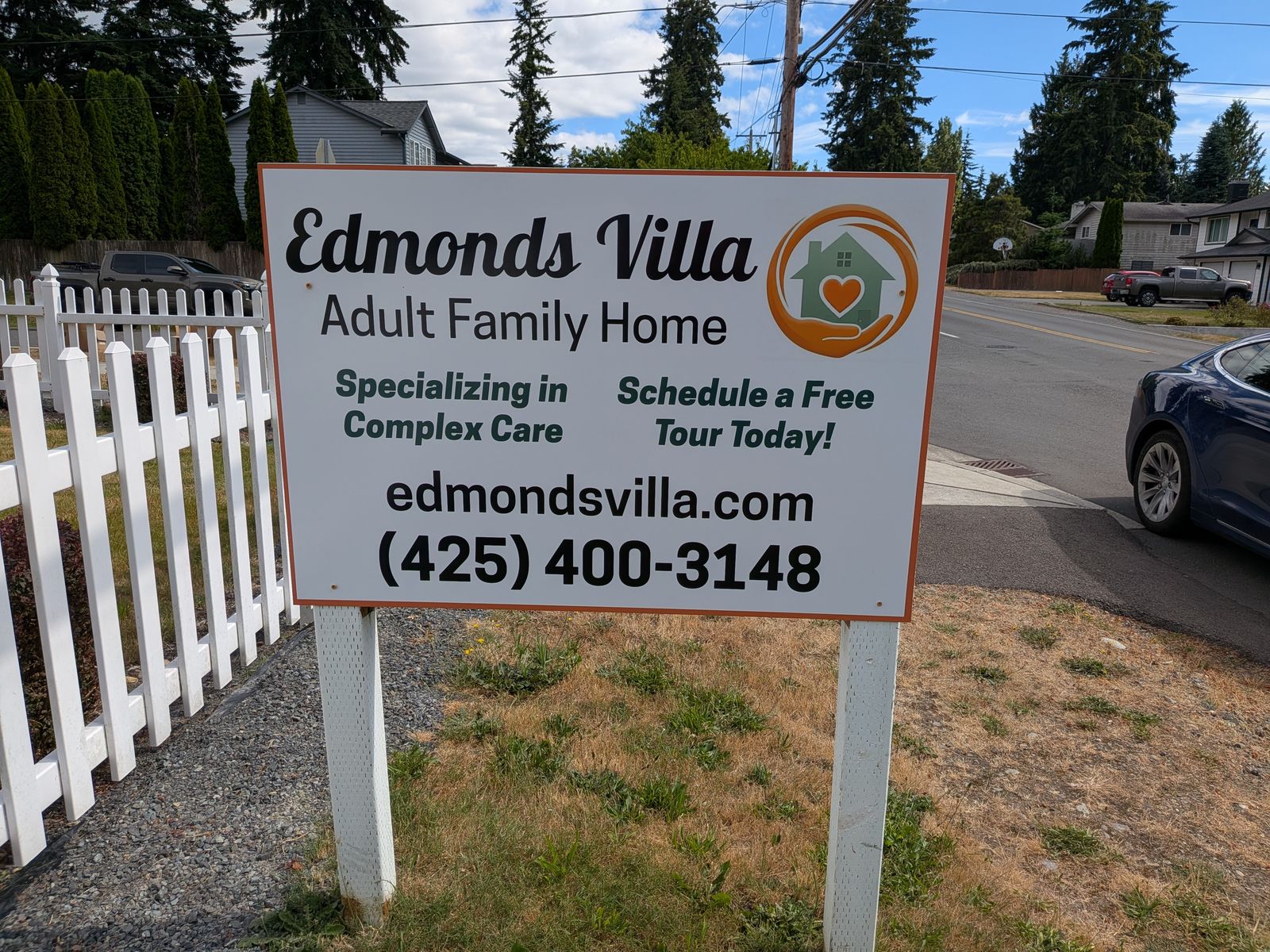
Edmonds Villa is a DSHS-licensed adult family home in Edmonds, Washington, licensed for up to six residents and owned and operated by Sandra Namwase, RN. The RN ownership isn't a credential listed on a brochure — it is the structural reason the home can provide high-acuity care at all. Every clinical decision runs through someone with direct medical accountability, and the six-resident scale means that accountability is personal rather than administrative.
The home was built around the conditions that most adult family homes turn away. Its services include Parkinson's and other neurological condition management, peritoneal dialysis and home hemodialysis support, G-tube and J-tube feeding management, bariatric care with appropriate transfer equipment, oncology symptom management, complex metabolic care, and cardiovascular and pulmonary support. Each of these requires the combination this article has been describing: licensed nursing oversight, condition-specific protocols, specialized equipment, and coordination with the resident's physicians and visiting clinicians.
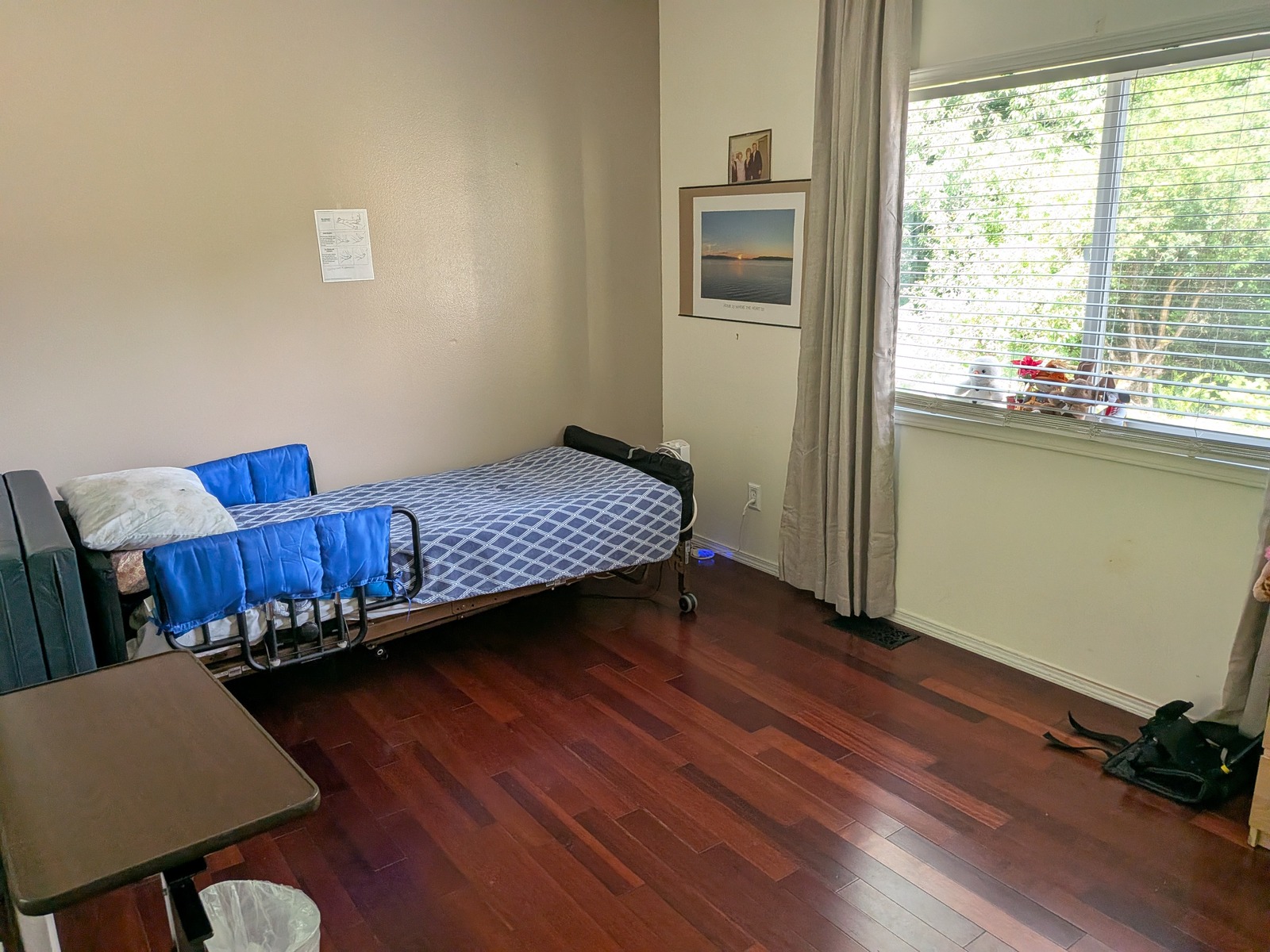
What families tend to notice first, though, is not the equipment — it's that their loved one is in a real home. A shared living room. A kitchen where meals are cooked for six people, not for sixty. Bedrooms that feel like bedrooms, including rooms outfitted with a hospital bed and patient lift so that clinical support doesn't come at the cost of dignity. The spousal room and board option even allows a well spouse to live alongside a partner who needs high-acuity care, for couples who refuse to be separated by a diagnosis.
Wondering whether high-acuity care is what your loved one needs? The team at Edmonds Villa talks with families about complex conditions every day. Reach out and we'll give you a straight answer about whether we're the right fit.
What to look for in any high-acuity home
Whatever home you consider, the same tests apply. Verify the DSHS license number directly through the Residential Care Facility Search tool, and read the last two inspection reports. Ask who holds clinical accountability, how many residents each caregiver supports during the day and overnight, how delegation and visiting nursing services are coordinated, and — the question that reveals everything — how the home would handle a specific medical emergency related to your loved one's condition. A home that can't answer that last question with specifics hasn't thought the scenario through.
Frequently Asked Questions
What is high acuity care?
High acuity care is the ongoing management of complex medical conditions that require trained nursing oversight, specialized equipment, and detailed clinical protocols. In a residential setting it includes support like dialysis, tube feeding, Parkinson's medication management, and bariatric care — needs that go well beyond the personal care a standard adult family home provides.
What is the difference between custodial care and high acuity care?
Custodial care focuses on daily living support — bathing, dressing, meals, medication reminders, and supervision. High acuity care adds continuous clinical management of medical conditions, including skilled nursing oversight, condition-specific protocols, specialized equipment, and coordination with physicians and visiting clinicians. Custodial care helps someone live; high acuity care actively manages a medical condition.
Can an adult family home provide high acuity care, or does my loved one need a skilled nursing facility?
Many high-acuity conditions can be managed in a residential adult family home when the home is set up for them. An RN-owned and operated home like Edmonds Villa combines licensed nursing oversight with nurse delegation and visiting nursing services, so residents receive skilled care without the institutional environment of a skilled nursing facility. A physician-led care team determines when SNF-level care is medically required.
What is nurse delegation, and why does it matter for high acuity care?
Nurse delegation is a Washington State process in which a licensed RN delegates specific, well-defined nursing tasks to trained caregivers, then supervises how they are carried out. It is what allows residential homes to safely deliver tasks like tube feeding and insulin management to qualified residents. It matters because it means complex care is directed by a nurse's clinical judgment rather than by caregivers working without nursing oversight.
What conditions typically qualify for high acuity residential care?
Common qualifying conditions include Parkinson's disease and other neurological disorders, peritoneal dialysis and home hemodialysis, G-tube and J-tube feeding, bariatric care, oncology symptom management, complex metabolic conditions, and cardiovascular or pulmonary conditions requiring close monitoring. For a full list with details, see our companion guide to conditions that qualify for high-acuity residential care.
How much does high acuity care in an adult family home cost?
Adult family home costs in Washington State generally range from $4,500 to $9,000 per month. Homes with RN supervision, specialized equipment, and high-acuity capabilities sit at the higher end, and the difference reflects real clinical capacity. Payment options include private pay, the COPES Medicaid waiver, the Community First Choice program, VA Aid and Attendance benefits for veterans, and long-term care insurance.
How do I know if my loved one needs high acuity care?
Start with their care team. If a physician, nurse, or discharge planner recommends ongoing skilled nursing oversight, specialized equipment, or condition-specific protocols, ask directly whether a high-acuity adult family home can meet those needs. Signs include complex medication schedules that must be timed precisely, dependence on medical equipment, and conditions that change week to week and need close monitoring.
Understanding High-Acuity Care Is the First Step to the Right Home
High-acuity care sounds intimidating because it describes serious medical needs. But understood clearly, it also points the way to a real solution: a residential setting, small enough for your loved one to be known, staffed and led by a nurse, and equipped to manage a complex condition without forcing a move into an institution.
If the term has been floating around your family's conversations, that's your signal to ask sharper questions. Start with your loved one's care team, confirm what level of nursing oversight and equipment is actually required, and then look for a home whose clinical capabilities — not its marketing — match those requirements. When a home can say yes to the full picture of your loved one's needs, you'll know you've found the right place.