The day a parent moves into an adult family home can feel like a cliff's edge — for you, and far more for them. After months of weighing options, the day arrives with boxes, unfamiliar rooms, and a goodbye that never quite feels finished. But experienced care providers see the same thing again and again: the move itself is rarely what causes lasting distress. What shapes a residential care transition is how it's approached — how much control the parent keeps, how the change is framed, and how the first weeks are handled.
This guide is written for the adult child making a decision on behalf of someone they love — and then carrying the emotional weight of it. It walks through the psychology of the move from your parent's perspective, the practical steps that reduce the shock of relocation, and the signs the transition is settling, or needs your attention. The advice comes from the perspective of an RN-owned and operated adult family home in Edmonds, Washington, where families navigate these transitions every week.
The Emotional Weight of a Residential Care Transition
Before you can help your parent adjust, it helps to understand what they are grieving. A move into care is rarely one loss; it is several losses at once. There is the loss of the home itself — the walls, the garden, the chair that holds the shape of decades. There is the loss of control — of meals, schedules, and the small daily decisions that quietly compose a life. And there is often a loss of identity: the shift from the person who cares for others to the person who is cared for. That last loss is often the most painful — and the most unspoken.
None of this means the decision was wrong. Very often the opposite is true: a parent moves into care because the alternative — living alone and unsafe, or depending entirely on an exhausted family caregiver — has become the greater harm. Understanding the emotional landscape of a residential care transition matters because it changes what you say and do. When you recognize that your parent is grieving, you stop reading their sadness or anger as a verdict on you and start responding to it as the grief it is.
Expect the feelings to come in waves. A parent may seem relieved one day and despondent the next, angry at the adult child who made the calls and apologetic within the hour. All of it is normal. The goal is not to eliminate difficult emotions but to create enough safety and predictability that they move through without becoming a wall between your parent and their new home.
Involve Your Parent in the Decisions, Even the Hard Ones
The single strongest antidote to feeling displaced is a sense of control. Research on relocation in older adults points the same direction again and again: people who feel they had some say in the move adjust far better than those who feel it happened to them. Even when a parent cannot decide everything, giving them real choices — not cosmetic ones — restores agency that cushions the shock.
Where possible, involve your parent early. Bring them on tours, introduce them to caregivers, let them see the room and the common spaces where they would eat and sit. Let them weigh in on the home itself when their cognition allows. When it doesn't — when a parent lives with significant dementia or a condition like Parkinson's that has progressed — involvement takes a different form: preserve their preferences where you know them, speak for their values, and tell staff who they were before the diagnosis. For a concrete walkthrough of assessments, paperwork, financing, and moving day itself, our step-by-step guide to moving a parent into care covers the logistics in detail.
Small choices matter more than most families expect. Which side of the room should the bed face? Which photos go on the dresser? Tuesday or Saturday for visits? Each decision, however small, says the same thing: your preferences still count here. That message is a large part of what separates a traumatic transition from a manageable one.
Frame the Move as a Step Toward Care, Not a Loss
Language shapes how everyone experiences the move. The difference between "we can't take care of you anymore" and "we've found a place that can keep you safe around the clock" is not cosmetic — it changes the story a parent tells themselves about why they are leaving. The first framing makes the move a verdict on their life and your devotion. The second frames it as an act of love: finding the care their needs now require.
That reframe is not about hiding reality; it is about being accurate. Most families reach placement not because love ran out, but because the level of need — overnight supervision, medication management, transfer assistance, complex medical care — exceeded what one or two people could safely provide at home. That is a legitimate, even loving, reason to move, and speaking about it that way gives parent and child a story they can live with.
At the same time, do not rush your parent past their grief. It is possible to hold two truths at once: this move is necessary and loving, and it is also a real loss that deserves mourning. Let them say what they need to about the house they are leaving — "I know you'll miss the garden, and it's okay to be sad" — before gently turning toward what the new home will offer. Feeling heard softens resistance more than any argument.
Bring the Familiar Along: Objects and Continuity
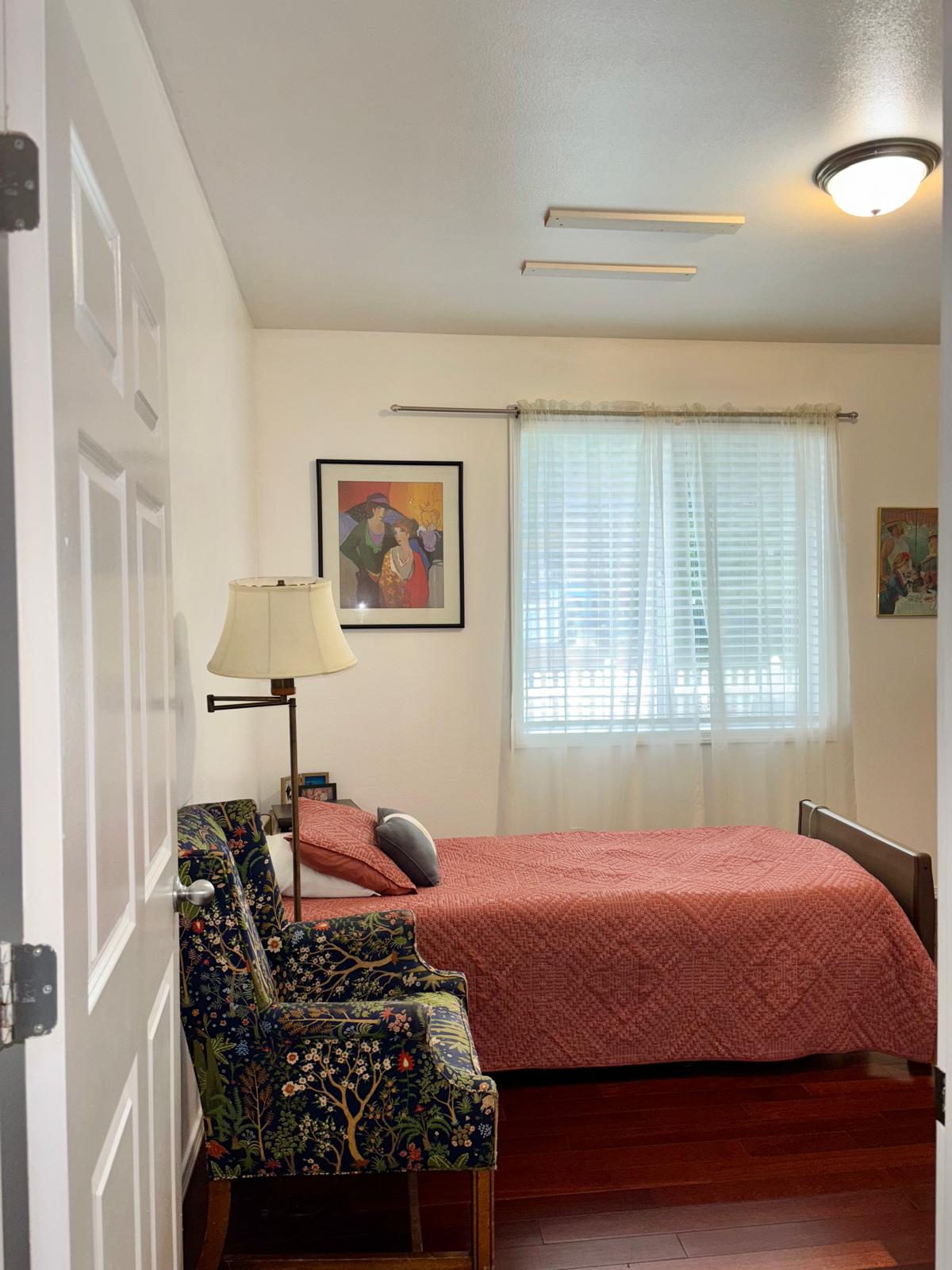
A room full of strangers' furniture is a constant reminder that you are a guest. A room furnished with your own things is a bridge back home. When families set up a parent's space, the objects they bring are not decoration; they are anchors of identity that tell the mind, "you still exist here, you are still you."
Bring what matters most: a favorite chair or blanket, family photographs, a familiar bedspread, books, a radio or television, devotional items, and tools of lifelong hobbies — the knitting basket, the model ship, the baseball glove. Arrange the room together if your parent can be involved, and don't rush it. In an adult family home — a real house rather than a facility wing — familiar objects blend naturally into shared spaces, so a resident's framed photos on the living room shelf make the whole house feel like everyone's home.
Continuity extends beyond objects to routines. If your parent has always had coffee at 7 a.m., watched the evening news at six, or taken a walk after lunch, write those rhythms down and share them with the care team. Routines are the invisible architecture of a person's day, and preserving them is one of the most effective — and most overlooked — ways to reduce the disorientation of a move.
The Role of Staff: Trust, Routines, and Consistency
The caregivers your parent meets in the first days will shape their entire experience of the move. In a large facility, staff rotate and a resident may interact with a dozen different aides in a single week. In a small licensed adult family home — Washington State caps these homes at six residents — the same caregivers are present day after day and learn each person's history, preferences, and rhythms in a way a facility cannot match.
You can help this along in practical ways. Introduce your parent to staff by name, and give each caregiver a short portrait of who your parent is — not just their diagnosis but their life: the job they held, the grandchildren they adore, the way they take their coffee. A care team that knows the person behind the patient provides a different kind of care, and gives your parent familiar faces to hold onto from day one.
At an Edmonds Villa, that continuity is built into the model. The home is RN-owned and operated, so clinical decisions carry direct nursing accountability, and the six-resident scale means caregivers notice the small changes — appetite, energy, mood — that signal how a person is truly settling in. When a transition is hard, this is the team that catches it early and adjusts, and that two-way relationship between staff and family is one of the strongest protective factors in the entire process.
Considering a high-acuity adult family home for your parent? Edmonds Villa is an RN-owned and operated home in Edmonds, WA, licensed for up to six residents with complex medical needs. Contact us to ask questions or schedule a tour — we'll be honest about whether we're the right fit for your family.
Managing the First Weeks of Transition
The first weeks are the most delicate and they follow a predictable shape. In the first few days, expect emotional exhaustion on both sides. Keep goodbyes warm but not prolonged, and give your parent something concrete to look forward to: "I'll be back Thursday, and we'll have lunch together." In the first two weeks, expect the hardest patch. Sleep disruption, reduced appetite, and repeated questions about going home are common, even in smooth transitions. Respond with steadiness, not anxiety.
A few practical habits make a real difference. Keep visits on a predictable rhythm — consistency builds the trust that a new place eventually feels safe. Arrive without fanfare and leave without drama; long emotional departures are harder than clear ones. Stay in regular touch with the care manager, not just with your parent, so you hear how overnight went and whether the picture staff see day to day matches what you see in visits. And watch for improvement at the one-month mark: if sleep, appetite, and mood are trending better by then, the foundation of a successful transition is in place.
Remember that a difficult first month is not a failed move. Relocation is a genuine stressor, and early distress says little about how a parent will feel in six months. The families who fare best keep showing up, keep communicating, and let the settling happen on their parent's timeline rather than their own.
Handling Guilt and Resistance
Two emotions dominate family transitions, and neither belongs to your parent alone. The first is guilt — the voice telling you a good child would have found another way. The second is resistance — your parent's, your siblings', sometimes your own. Both deserve compassion; neither deserves to run the show.
On guilt: remember what you did to reach this point. The nights spent on edge, the calls taken at work, the appointments steered, the care you gave until giving it at home was no longer safe for anyone. Placing a parent in a good residential home is not the moment you stopped caring; it is the moment your care changed form — from hands-on to orchestrating. Guilt shrinks when you witness the concrete goods: medication on time, meals actually eaten, a full night of supervised sleep, staff who greet your parent by name. And if you are noticing exhaustion, irritability, or your own health slipping, our guide to caregiver burnout — signs, causes, and what to do next is worth reading. You cannot steady your parent's transition from an empty cup.
On resistance: treat it as information, not an attack. A parent who resists often feels unseen, unheard, or out of control — and the remedies above are the same ones that soften resistance over time. Siblings who resist may need facts and a shared tour rather than persuasion. The goal is not to eliminate resistance completely but to keep moving with enough trust that it becomes part of the process, not the whole of it.
Visiting and Staying Connected
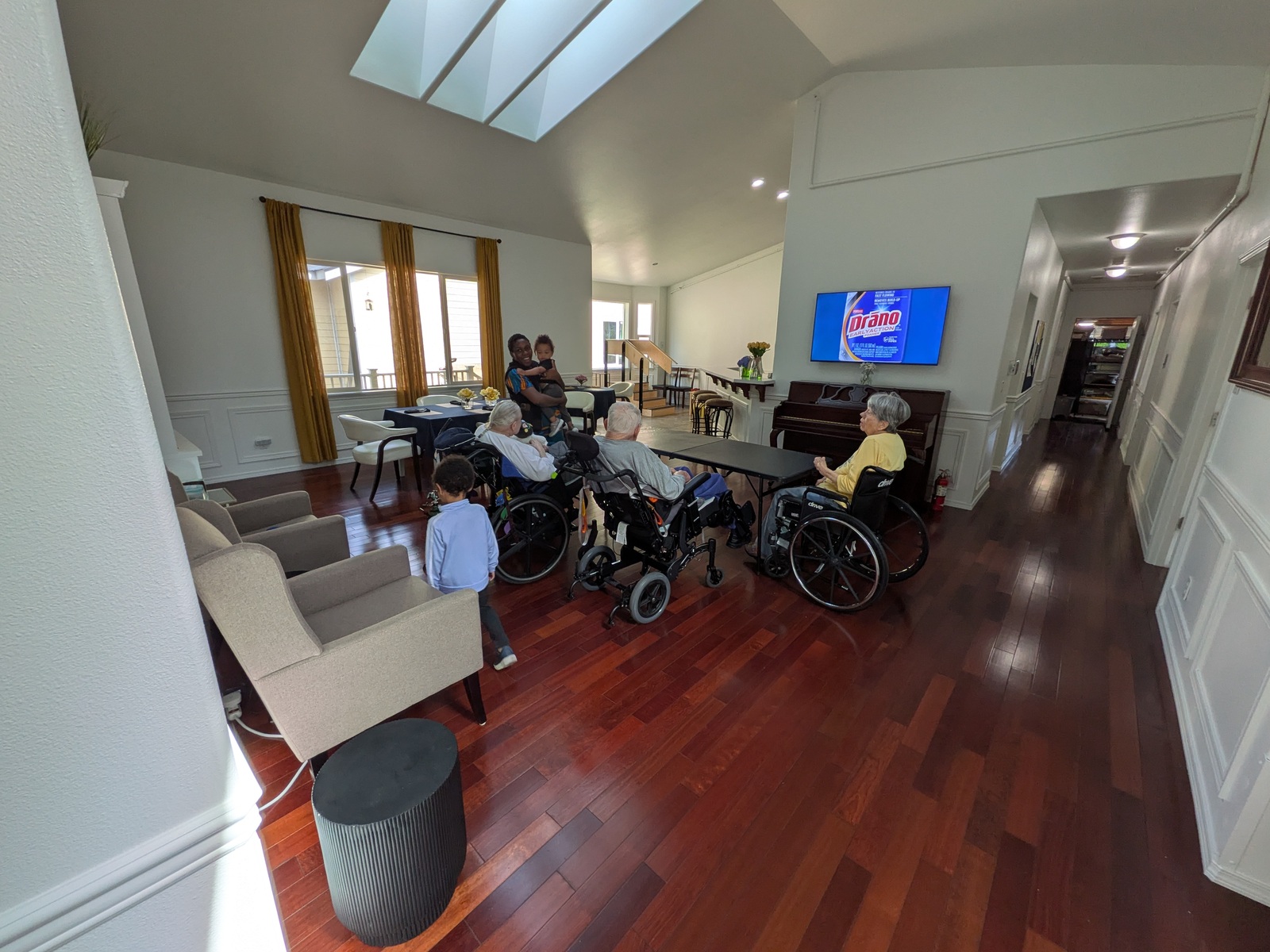
After the move, the single most protective factor for your parent's wellbeing is your continued presence. Not constant presence — continued presence: reliable, unhurried, and woven into their new life rather than hovering at its edges. A parent who knows exactly when you'll be back stops anxiously watching the door and starts living in the day.
Quality matters more than quantity. Bring a shared meal or a favorite treat, join an activity the home offers, sit in the common living room rather than only the private bedroom, and let your parent set the pace. Involve the wider family — grandchildren especially, who can be a joy a parent holds onto between visits. Phone and video calls work best on a schedule: "Grandpa calls every Sunday after church" becomes part of the week's rhythm. And stay engaged at the care level too — attend care plan meetings, respond to updates, and raise concerns when something feels off. Your voice in the care team's room is part of what keeps the care excellent.
Signs the Transition Is Going Well — or Needs Attention
Because a transition looks different day to day, hold a clear picture of what "settling in" actually looks like. Signs it is going well:
- Sleep, appetite, and energy improve week over week
- Your parent calls staff and other residents by name
- They participate in meals and daily activities on their own
- The repeated question "when am I going home?" fades
- They begin referring to the home as "my room" or "my house"
- They look forward to — rather than dread — your visits
Signs it needs attention: distress that deepens rather than lifts after the first month, sustained withdrawal or refusal to eat or take medication, frequent crying, marked sleep disruption, or a noticeable decline in cognition or mobility beyond the normal fatigue of moving. None of these automatically means the placement is wrong — but it means it's time to act. Raise it with the home's RN or care manager, consider a care plan update, and increase the rhythm of family visits for a few weeks. In most cases, an attentive team and an involved family turn a rocky patch into a settled home.
Frequently Asked Questions
How long does it take for a parent to adjust to an adult family home?
Adjustment usually unfolds over weeks, not days. Many residents begin to settle within the first two to four weeks as routines and familiar faces take hold, while a fuller sense of 'this is my home' can take one to three months. Plateaus are normal — a parent who seems distant in week one is often noticeably more at ease by week four.
How do I talk to my parent about moving to a care home without upsetting them?
Use your own words, but avoid framing the move as a failure or an abandonment. Lead with what stays the same — your involvement, their belongings, their daily rhythms — and with the care they will receive. Involve them in the search and the choices where possible, and give their feelings room to be heard rather than talked over.
What should my parent bring to an adult family home to make it feel like home?
Bring what anchors their identity: a favorite chair or blanket, family photos, a familiar bedspread, books, a radio or television, and items tied to lifelong hobbies. Familiar objects matter less for their function than for the continuity and comfort they provide during the first weeks of adjustment.
How can I manage my own guilt about moving my parent into a care home?
Remind yourself that the move is a response to real needs, not a rejection. Guilt tends to shrink when you see the concrete benefits — proper medication management, overnight supervision, consistent meals — and when you keep visiting and stay involved. Caregiver burnout is real, and you cannot pour from an empty cup.
What are the signs that a transition is going well?
Good signs include improving sleep, appetite, and mood; engaging with staff and residents by name; participating in meals; and gradually stopping the repeated question 'when am I going home?' A parent who begins referring to the home as 'my room' or 'my house' has typically turned an important corner.
When should I worry about how my parent is adjusting?
Worry when distress persists or deepens beyond the first few weeks — sustained withdrawal, refusing meals or medication, frequent crying, sleep disruption, or a notable decline in cognition or mobility. Raise these concerns with the home's RN or care manager early; a routine change, a care plan update, or extra family visits often help.
Can family members visit at any time at an adult family home?
Licensed adult family homes are residential settings, and most — including Edmonds Villa — welcome family visits on a flexible, open-door basis that respects each resident's routine and rest needs. Because these homes are small, visits feel natural and unhurried, and consistent family presence is strongly encouraged during a transition.
Transition Is a Process, Not a Single Day
Helping a parent move into an adult family home without trauma is rarely about finding the perfect moment; it is about tending the weeks around the move — honoring their grief, protecting their sense of control, surrounding them with familiar objects and familiar faces, and showing up steadily afterward. Each small action sends the same message: this is not abandonment, this is care that has taken a new form.
You do not have to manage this alone. A good care team is a partner in the transition, not just a provider of care. At Edmonds Villa, an RN-owned and operated adult family home in Edmonds, Washington, parents move into a real home with staff who know them by name — and who have guided many families through these first, tender weeks. If you are weighing a residential care transition for your parent, start with a conversation. It may be the most reassuring call you make.