If you're reading this, there's a good chance you've been carrying more than anyone realizes. You're the one who shows up — for appointments, for medications, for the long quiet hours when nobody else is around — and lately it's been harder to find the energy to show up for yourself. Caregiver burnout rarely announces itself in one dramatic moment; it accumulates quietly, in missed lunches, interrupted nights, and the person you no longer recognize in the mirror. This article is about what caregiver burnout looks like, why it happens, and what you can do about it, starting today.
This is written for the adult child managing a parent's care, the spouse exhausted by what a promise to care at home costs, and the sibling doing ninety percent of the work. If that's you, reading about burnout — rather than dismissing it — is itself a sign something needs to change. Burnout isn't a character flaw or a lack of love; it's the predictable result of an unsustainable arrangement. When the system is broken, the most loving thing you can do is change the system — not just try harder within it.
Caregiver Burnout: The Signs You're Running on Empty
Burnout is often described as "running on empty," but it rarely feels like one clean moment of collapse. It's a slow fade — and family caregivers are especially good at not noticing it in themselves, because they're so focused on someone else. If you recognize several of the following signs, you're not imagining things; you're experiencing a real, documented pattern.
Physical signs
Your body usually speaks first, and it's the easiest set of signals to rationalize away. Persistent exhaustion that sleep doesn't fix, frequent headaches, a tight jaw, and shoulders that never relax are common — as is losing your appetite or eating on autopilot. If you've been telling yourself "I'll rest when things settle down," that's the burnout talking; things rarely settle down on their own.
Emotional signs
The emotional signature of caregiver burnout is a strange mix of numbness and overreaction. You may feel irritable with the person you love — then guilty about it, which only makes it worse — or find yourself dreading tasks you once did willingly. Some caregivers describe a flattening, an inability to feel much of anything: the mind's way of protecting you from carrying more than it can hold.
Logistical signs
There's a behavioral layer too. You've been canceling your own appointments, falling behind on everything, and narrowing your relationships to logistics. If someone asks what you did for yourself this week and you can't answer, that's data — your life has quietly been absorbed into someone else's.
Why It Happens: What Actually Causes Caregiver Burnout
Caregiver burnout isn't caused by a lack of love, effort, or competence — it's caused by structural realities that place the whole weight of care on one set of shoulders. Naming them matters, because it moves the problem from "what's wrong with me" to "what's wrong with this arrangement."
The round-the-clock nature of the job
Caregiving for someone with significant needs is a 24-hour role never designed to be a one-person job. Medication schedules, bathroom assistance, fall risk, meals, refills, monitoring — these aren't eight-hour tasks. Even when your loved one sleeps through the night, you often don't, because you're listening. When one person absorbs all of that with no real time off, burnout isn't a failure of character; it's arithmetic.
Isolation and the absence of a backup plan
Many family caregivers have no real backup — a sibling lives across the country, friends offer support that never quite becomes something concrete. The absence of a reliable second set of hands makes even a break feel complicated, and you stop asking for help because arranging it feels like more work than doing it yourself. That is exactly how burnout becomes a trap.
Watching someone you love decline
There's an emotional load no logistics solve: watching someone you love change. For a caregiver of someone with a progressive condition — Parkinson's, dementia, kidney disease, cancer — every small loss is felt personally. Grief and caregiving run on the same track, and unprocessed grief is a heavy, silent contributor to burnout that support can help with.
High-acuity demands without professional training
When a loved one's needs reach a certain complexity — Parkinson's medication timing that must be precise, dialysis support, tube feeding, complex transfers for bariatric care — the demands far exceed what a well-meaning family member was trained to handle. Being responsible for something you're not fully trained to do, on top of actually doing it, is one of the fastest routes to burnout. This is exactly the kind of care a high-acuity residential setting is built to absorb.
The Real Cost of Doing It Alone

Burnout isn't just an uncomfortable feeling — it has real consequences for your health, your relationships, and your finances. Being honest about them matters, because they're part of the case for changing the arrangement before it costs more than it already has.
Your health
Family caregivers are at higher risk of their own chronic health problems, including depression and anxiety, as years of strain take their toll. The person who skips their own doctor's appointments to make someone else's is quietly deferring their own health. You deserve care too — and the person you care for would agree if they could see what this is costing you.
Your relationships
Caregiver burnout rarely stays contained. It shows up as a strained marriage, resentment between siblings, children who notice a parent who's always tired. Many caregivers are surprised to find the relationships that sustain them have narrowed to logistics — and protecting those around you often means protecting your own capacity first.
Your finances
The financial picture is quieter but just as real: reduced work hours, missed opportunities, and out-of-pocket costs for supplies, transportation, and home modifications add up quickly. Many families discover an unsustainable at-home arrangement is costing more — in income, health, and time — than a professional option would. Doing it alone is frequently the most expensive choice, not the cheapest.
Why It's So Hard to Ask for Help
One of the most predictable parts of caregiver burnout is the guilt surrounding the idea of getting help — and it's often what keeps a burned-out caregiver stuck long after every practical signal says something has to change. The guilt comes from somewhere real: many of us carry the script that family takes care of family, and in many cultures that expectation is explicit and deep. The caregiver who says "I need help" can feel, in their quietest moments, like they've failed an unspoken exam.
We want to offer a different frame. Asking for help — a sibling covering a weekend, a hired caregiver for a few hours, or residential care — is not a withdrawal of love; it's how you protect the relationship. The person you care for would not want to be the reason your health collapses. What looks like "giving up" is often the clearest thinking you've done in months: love is not the same as carrying everything alone.
When Burnout Means It's Time to Consider Residential Care
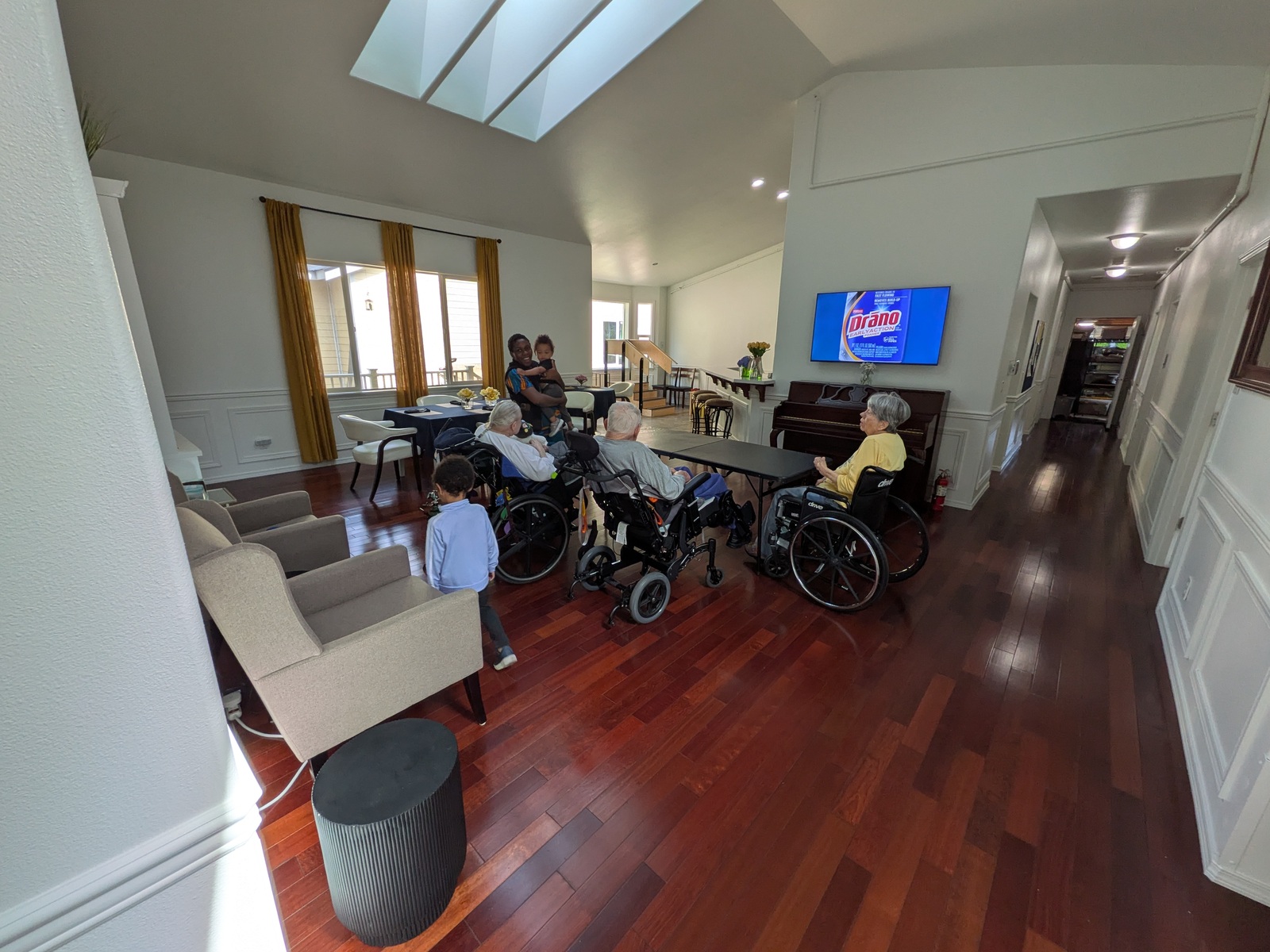
There's a point at which burnout stops being a signal to get more help at home and becomes a signal that the at-home plan itself isn't working. Burnout that responds to support — a respite weekend, a hired caregiver, a balanced family schedule — is manageable. Burnout that persists no matter what, while safety concerns keep mounting, is telling you something about the arrangement, not your dedication.
Safety signals that the plan has changed
Some warning signs belong on a list you take seriously: missed or doubled medications, a fall your loved one didn't tell you about, weight loss because meal prep fell through the cracks, a medical event that escalated because no professional was there to catch it early. When those become recurring themes, the care plan has already changed — whether anyone has said so or not. That's the moment to look at supported settings; our guide on when home care is no longer enough walks through these signals in depth.
Burnout that doesn't lift
If you've tried to add support and the exhaustion, irritability, or dread persist, take that seriously. Your health matters for your own sake and because your loved one's care depends on a caregiver who is well. A parent cared for by a burned-out family member is not safer than one cared for by a professional team in a small home — however much love is involved. Love is not a substitute for a care plan.
A third option between home and a nursing facility
Many families believe the only alternative to doing it themselves is a large facility. In Washington State, there's a middle path: a licensed adult family home. An adult family home is a small single-family house where up to six residents receive daily care, meals, supervision, and medical support — a real home on a residential street, regulated by DSHS under RCW 70.128, and distinct from assisted living or a nursing home. For a burned-out family it offers something specific: the care moves to people trained and present around the clock, while you move back into the role of daughter, son, or spouse.
What a high-acuity home can take off your plate
Edmonds Villa is an RN-owned and operated high-acuity adult family home in Edmonds, Washington, licensed by DSHS (#758617) for up to six residents. Because it's RN-owned, complex medical needs that most homes can't accept — Parkinson's and neurological care, peritoneal dialysis and home hemodialysis, G-tube and J-tube feeding, bariatric care, oncology support, and cardio-pulmonary conditions — are managed with licensed nursing oversight. The point isn't to take away your involvement; it's to change your job description from round-the-clock provider to a family member who visits, stays involved, and can finally breathe.
Are you carrying more than you can sustain? You don't have to decide this alone. If caregiver burnout is telling you it's time to look at supported care, talk with Edmonds Villa — we'll give you honest answers about whether our home is a fit for your family.
What to Do Next: Concrete Steps to Recover and Get Support
Whatever you decide about residential care, recovery from caregiver burnout starts now, with steps you can take this week. None require a perfect plan or a perfect family — they require one honest conversation and one small change at a time.
- Name it out loud. Tell a trusted person what you're really experiencing — not the sanitized version. Saying "I'm burned out" is the first and most important intervention.
- Ask for something specific. Vague requests for "help" don't land. Ask a sibling to cover Tuesday nights, a friend to drive to one appointment, a neighbor to pick up groceries. Specific requests are easier to say yes to.
- Book one hour for yourself this week. A walk, a meal alone, an appointment with your own doctor. Treat it as a medical appointment, because it is.
- Bring your parent's doctor into the conversation. A physician can give an honest read on what care is required — and can be a powerful ally in saying it's okay to use help.
- Look into community support. Washington State offers resources through DSHS, including caregiver support options and Medicaid waivers like COPES and Community First Choice (CFC). If your loved one is a veteran, ask about VA Aid and Attendance benefits.
- Reach out to a caregiver support group or counselor. Caregivers tend to feel alone because they are alone in the work. A support group puts you in a room — virtual or real — with people who understand.
- If you're a child coordinating a parent's care, use our step-by-step guide for adult children to structure the decisions in front of you. Having a sequence reduces the overwhelm.
- Consider the full range of care options. Sometimes burnout is the honest signal that supported living is the right next step — see our guide to residential care options and our adult family home guide for how to evaluate one.
The thread running through all of these is that you are not the plan — the care plan has to be bigger than one person. Families who get through this well are the ones who let it expand: more helpers, more professionals, more honest conversations, and sometimes, a supported home.
Frequently Asked Questions
What are the first signs of caregiver burnout?
The earliest signs are usually exhaustion that rest doesn't fix, irritability toward the person you're caring for, and a creeping sense of dread about daily tasks. You may also notice changes in your own sleep, appetite, or patience. If those feelings persist for weeks, that's more than a bad stretch — it's a signal that your support system needs to change.
Is it normal to feel guilty about asking for help as a caregiver?
Yes — and it's one of the most common reasons caregivers push themselves past their limits. Guilt usually comes from a story we tell ourselves about what a good family caregiver should be, not from any genuine failing. Asking for help is not a betrayal of your loved one; it's how you make sure you can keep showing up at all.
What should I do today if I think I'm burned out?
Start by naming the problem out loud — to a trusted friend, a sibling, or your parent's doctor — and accept that your limits are real. Then make one concrete request for help this week, whether that's a family member covering an evening, a hired respite visit, or a call to a local agency. Recovery begins when you stop carrying it alone.
How do I know when it's time to consider residential care?
When the demands of caregiving are compromising your own health, or when your loved one's safety — missed medications, falls, skipped meals — is becoming a recurring concern, the current plan has stopped working. Burnout that persists despite help is not a sign of weakness; it's a sign the care itself needs to move to a supported setting.
What is an adult family home, and how can it help a burned-out family caregiver?
An adult family home is a licensed residential care home in a single-family house where up to six residents receive daily care, meals, supervision, and medical support in a home setting. Washington State licenses these homes through DSHS under RCW 70.128. Moving a parent to a home like Edmonds Villa doesn't end your role — it changes it from round-the-clock provider to a family member who visits, stays involved, and can finally breathe.
Does Medicaid help pay for adult family home care in Washington?
Yes. Washington's COPES Medicaid waiver can cover personal care services for qualifying residents, and the Community First Choice (CFC) program offers similar coverage. Room and board are typically paid through monthly income, and veterans may qualify for VA Aid and Attendance benefits.
How do I bring up residential care with a parent who resists?
Talk about it as a plan for their safety and your stamina, not as a decision made against them. Involve their doctor, use a home-care visit as a trial step, and visit homes together so it becomes a shared choice rather than a verdict. Emphasize what stays the same — your visits, your role in decisions — before discussing what changes.
The Kindest Next Step Is Usually the Honest One
If you've recognized yourself anywhere in this article, please don't read this as a verdict. Read it as permission — permission to notice your limits, to name the strain, and to let the care plan get bigger than you. Caregiver burnout is not a sign that you've failed your loved one. It's a sign that the arrangement has outgrown what any one person can carry.
Recovery starts with a single honest conversation, and it often ends in a place where your loved one is well cared for and you have your life back — a version of care where you're present, not depleted. Whether it's more help at home or a move to a supported setting like Edmonds Villa, the goal is the same: everyone in this family gets to be okay. Let's talk about whether we can help you get there.