There's a moment in every caregiving journey when the question changes. It stops being "how do we make this work?" and becomes "is this still working at all?" You've set up pill organizers, installed grab bars, hired a caregiver for the mornings — and still you lie awake wondering whether your mom is safe alone between visits, whether your dad actually took the medication you left out, or whether the next fall is waiting at the top of the stairs. That uncertainty is not a sign that you've failed. It is the signal many families need before they can begin asking the harder question: when to seek care that goes beyond what home can safely provide.
This guide is written for adult children and family caregivers who have been doing everything they can — and who are beginning to suspect it may not be enough. We'll walk through the specific medical, safety, and emotional signals that indicate a loved one's needs have outgrown family-plus-home-care arrangements. You'll leave with a practical threshold framework ("if X, it's time"), a way to start the conversation without a fight, and a clear sense of what comes next in Washington State — including the residential option of an adult family home like Edmonds Villa in Edmonds, Washington.
Medication Complexity and Missed Doses
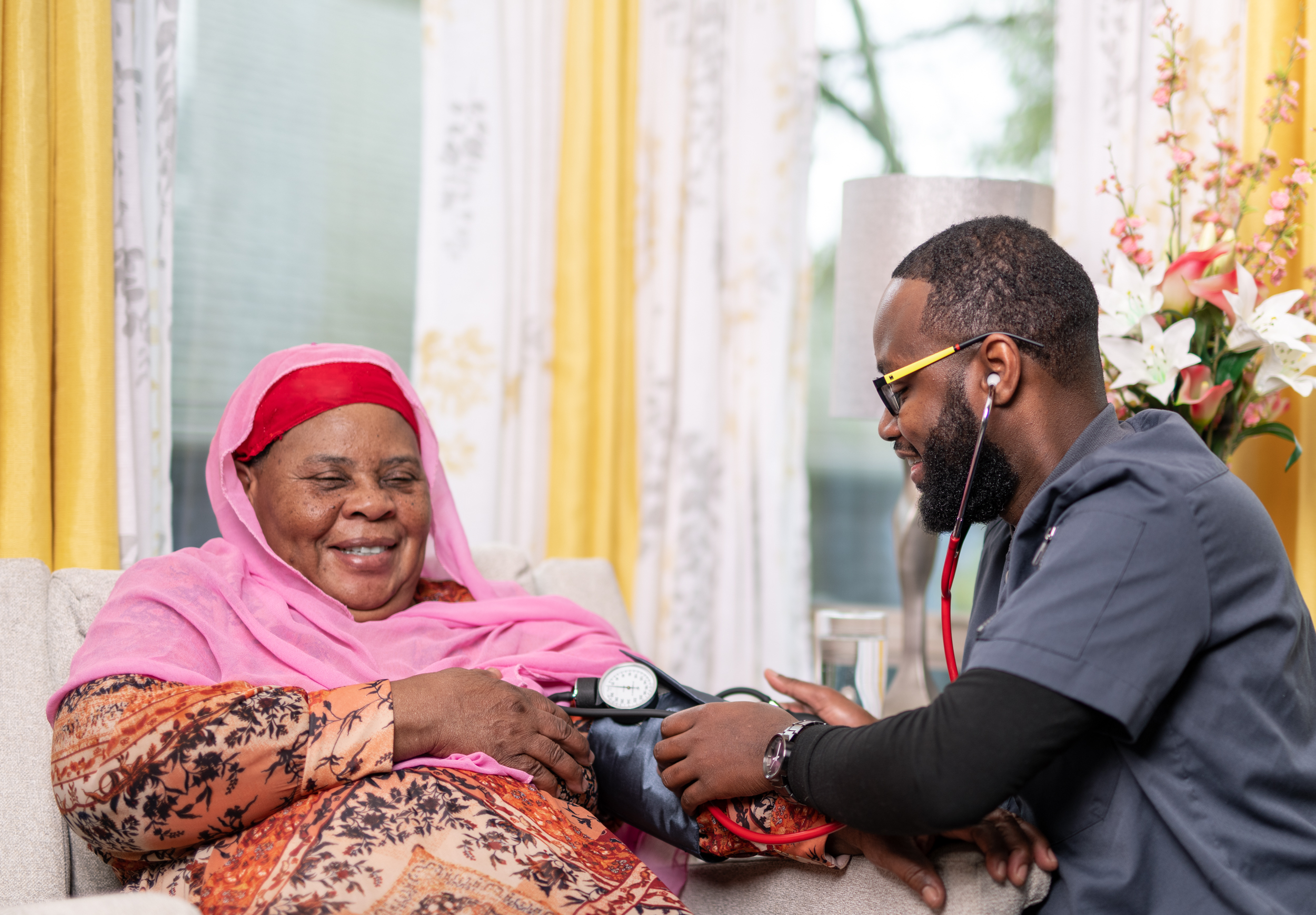
For many older adults, medication management is the first thing to outgrow home care — and it's often the quietest. A single missed dose of a blood pressure medication can cause a dangerous spike. A double dose of a blood thinner can cause internal bleeding. When a loved one takes five, eight, or a dozen medications with different timing requirements — some with food, some on an empty stomach, some morning-only, some every eight hours — the margin for error shrinks dramatically.
When a pill organizer stops being enough
Here are the signs that medication management has moved beyond what an organizer and a daily reminder can handle:
- You find pills left in the organizer at the end of the day, or pills from multiple days mixed together
- Your loved one can't remember whether they already took a dose — and neither can the person checking on them
- Several different helpers (you, a sibling, an in-home aide, a neighbor) are each handing out medications, so nobody has a complete picture
- The prescription list has changed recently, and the routine that used to work no longer does
- There have been emergency room visits or "episodes" that the doctor suspects are medication-related
In a residential setting, a single trained care team owns the medication process: doses are tracked on a documented schedule, prepared by people who know the resident, and reviewed with the prescribing clinician when something changes. That structure is precisely what a fragmented at-home routine cannot reliably provide.
Falls and Mobility Risk
Falls are among the most serious risks an older adult faces at home, and they are also among the clearest signals that home care has reached its limit. A fall that breaks a hip often marks a turning point — not just because of the injury, but because of what it reveals about the level of support required to keep that person safe from that day forward.
Mobility is a window into overall risk
Watch for the smaller signs before the fall itself happens: a new hesitation before standing up, a hand on the wall to steady the walk, a refusal to go upstairs, a fear of falling that keeps your loved one in one chair all day. When mobility declines, the risk compounds — getting to the bathroom at night, stepping over a pet, reaching for a cabinet, standing up too quickly. These are the moments no pill organizer can fix.
Ask yourself honestly: if your loved one fell right now, in the middle of the night, who would help them up? How long would they lie on the floor? That single question reveals more about the adequacy of your current setup than any checklist. If the honest answer is "they'd be alone for hours," it is time to take the falls question seriously as a when to seek care trigger.
The Need for 24/7 Supervision
Home care — even good home care — is scheduled care. A caregiver arrives at 8 a.m. and leaves at 2 p.m. You stop by after work. Your sister comes on weekends. But the needs of an older adult with significant medical or cognitive challenges do not observe a schedule. Confusion, pain, bathroom needs, and falls happen at 3 a.m. just as readily as at 3 p.m.
The practical question is not "how many hours of help does Dad need?" but "what happens during the hours when nobody is there?" For a loved one who is generally steady and oriented, those gaps are manageable. For a loved one who is unsteady, forgetful, or confused, every uncovered hour is a small gamble. When the gaps start producing incidents — a kitchen burner left on, a door locked from the inside, a missed meal, a fall discovered hours later — round-the-clock supervision moves from "nice to have" to "the thing that makes this safe."
Wandering and Getting Lost
Wandering is one of the most stressful behaviors family caregivers face, and one of the clearest signs that home is no longer a safe environment. A person with dementia who wanders may leave the house in any weather, at any hour, in a state of confusion — sometimes with a clear destination in mind (an old workplace, a childhood home), sometimes with none at all.
Wandering carries risks far beyond getting cold or lost. It can mean crossing busy streets, entering strangers' homes, falling in unfamiliar terrain, or being unable to find the way back once disoriented. A caregiver who is present for eight hours cannot prevent wandering during the other sixteen. Locks, alarms, and GPS trackers help, but they are management tools, not solutions. When wandering becomes regular, the person needs an environment where supervision is continuous and the space itself is designed to keep them safe.
Weight Loss and Dehydration
Unintended weight loss and dehydration are often the most under-appreciated red flags in family caregiving. They develop slowly, over weeks, so nobody notices the change until it's significant. But they are among the most reliable indicators that a loved one's basic needs are no longer being met at home.
The signs to watch for
- Clothes that fit more loosely than they did a few months ago
- Meals that are started but barely eaten
- Forgotten meals — "I wasn't hungry" or "I already ate" when no food was touched
- Dry mouth, dark urine, confusion that worsens in the heat — all possible signs of dehydration
- A pantry and refrigerator full of food, but a loved one who can no longer prepare or even remember to eat it
Weight loss in an older adult is not benign. It accelerates weakness, increases fall risk, and worsens nearly every chronic condition. When a loved one is losing weight despite food being available, the problem is usually support: someone needs to prepare the food, sit with them, encourage the meal, and notice when it isn't eaten. That is daily, attentive work — the kind a residential home provides as a matter of routine, with home-cooked meals served at regular times and caregivers who notice when a resident isn't eating.
Caregiver Exhaustion
Here is a truth families rarely say out loud: sometimes the strongest signal that home care is no longer enough is the condition of the caregiver. If you are the person providing care — or coordinating it — your health matters, not as a secondary concern but as a primary one. Caregiver exhaustion affects sleep, blood pressure, immune function, and judgment. An exhausted caregiver makes more mistakes, misses more signs, and has less patience for the very person they love most.
We've written separately about caregiver burnout — its signs, causes, and what to do next. Read that article if you recognize yourself in it. The relevant point here is that burnout is not a weakness or a failure of love; it is the predictable result of a job that is genuinely too big for one person. When caregiving is making you sick, resentful, or unable to function, that is a legitimate when to seek care signal for the family as a whole.
Wondering if your loved one's needs have outgrown home care? You don't have to figure this out alone. Edmonds Villa is an RN-owned adult family home that provides 24-hour care in a residential setting. Contact us for an honest conversation about whether we're the right fit.
Isolation and Loneliness
There is a kind of isolation that no amount of home visits can fully address. Even when family and caregivers come and go, an older adult who lives alone can spend most of their waking hours without meaningful human contact. Days can pass with television as the only companion. Appetite, sleep, mood, and even cognition decline when a person is starved of connection.
Isolation is not merely sad — it is a health risk. Loneliness is associated with higher rates of depression, cognitive decline, and even cardiovascular problems in older adults. The fix isn't another scheduled visit; it's a change in the fundamental structure of the day. In a residential home, meals happen at a shared table, conversation happens in the living room, and caregivers and fellow residents are present around the clock. For a loved one who has become withdrawn at home, that steady presence can be quietly transformative.
Behavioral and Cognitive Changes
Cognitive and behavioral changes deserve attention not only for the person experiencing them but for everyone in the household. These can include:
- Increased confusion, especially at dusk or night ("sundowning")
- Paranoia or suspicion of family members and caregivers
- Aggression — verbal or physical — that is new or escalating
- Leaving appliances on, losing valuables, or calling family repeatedly at odd hours
- Decline in hygiene, grooming, or the ability to manage the household
When these changes appear, home care often struggles for a specific reason: the environment itself is triggering or inadequate. An older person with dementia may become agitated in a cluttered house, or anxious about being alone, or aggressive when they feel unsafe. A residential care setting — smaller, calmer, more predictable — is often genuinely better for these residents, not just easier for the family. Consistent caregivers who know the person and a structured daily rhythm reduce confusion and agitation in ways that rotating in-home aides cannot replicate.
A Threshold Framework: When to Seek Care
Families often wait for a single dramatic event — a fall, a hospitalization, a crisis — to make a decision that was already becoming inevitable. This framework helps you decide before the crisis, using signals you can observe and count.
The "if X, it's time" thresholds
- If medication errors have happened more than once in the past month — missed doses, double doses, or confusion about whether a dose was taken — it's time to bring in a setting where one trained team owns the medication process.
- If your loved one has fallen even once in the past year and mobility is declining, or if they cannot get up from the floor without help, unsupervised time is no longer safe.
- If there are more than a few hours each day with no one available to respond to a need, and those hours have produced an incident (a missed meal, a fall, a burner left on, a wandering episode), the coverage model isn't working.
- If wandering has occurred even once, treat it as serious. A single wandering episode can be life-threatening; supervision must be continuous.
- If weight loss is noticeable — clothes looser, meals uneaten — over the course of a month, nutrition needs more hands-on support than home visits can provide.
- If the primary caregiver is exhausted, unwell, or considering giving up care entirely, that is a valid reason on its own — not a secondary one.
- If your loved one is spending days alone and shows signs of depression or withdrawal, the structure of residential life may be the healthiest change you can make.
Notice what these thresholds have in common: they are not about failure, and they are not about love. They are about risk and coverage. When the risk is real and the coverage has gaps, more of the same arrangement won't close those gaps. The question of when to seek care answers itself the moment you stop hoping the gaps will disappear and start measuring them honestly.
How to Start the Conversation
For most families, the hardest part isn't the research — it's the conversation. Many older adults fiercely resist the idea of leaving home, and the resistance can feel personal. Here's a gentler way to approach it.
- Start with specifics, not the decision. Don't open with "we're moving you." Open with what you've noticed: "I'm worried because you missed your pills twice last week," or "I'm scared about you being alone after dark." Make the concern concrete and caring.
- Frame it as a problem you're solving together. "We need to figure out how to keep you safe. Let's look at options together." This shifts the conversation from a verdict to a partnership.
- Involve their doctor. A physician's recommendation carries weight that family members can't. Ask the doctor to talk with your loved one about safety and care needs — and to back you up when the topic of residential care comes up.
- Talk about what they'll gain, not what they'll lose. Regular meals, people around all the time, no more loneliness, no more worrying about a fall. Lead with the benefits of safety and companionship, not the loss of independence.
- Go slowly, and keep the door open. One conversation rarely closes the case. Let the idea settle. Tours and visits help enormously — many people change their mind after seeing a warm, homelike place in person.
What Comes Next in Washington State
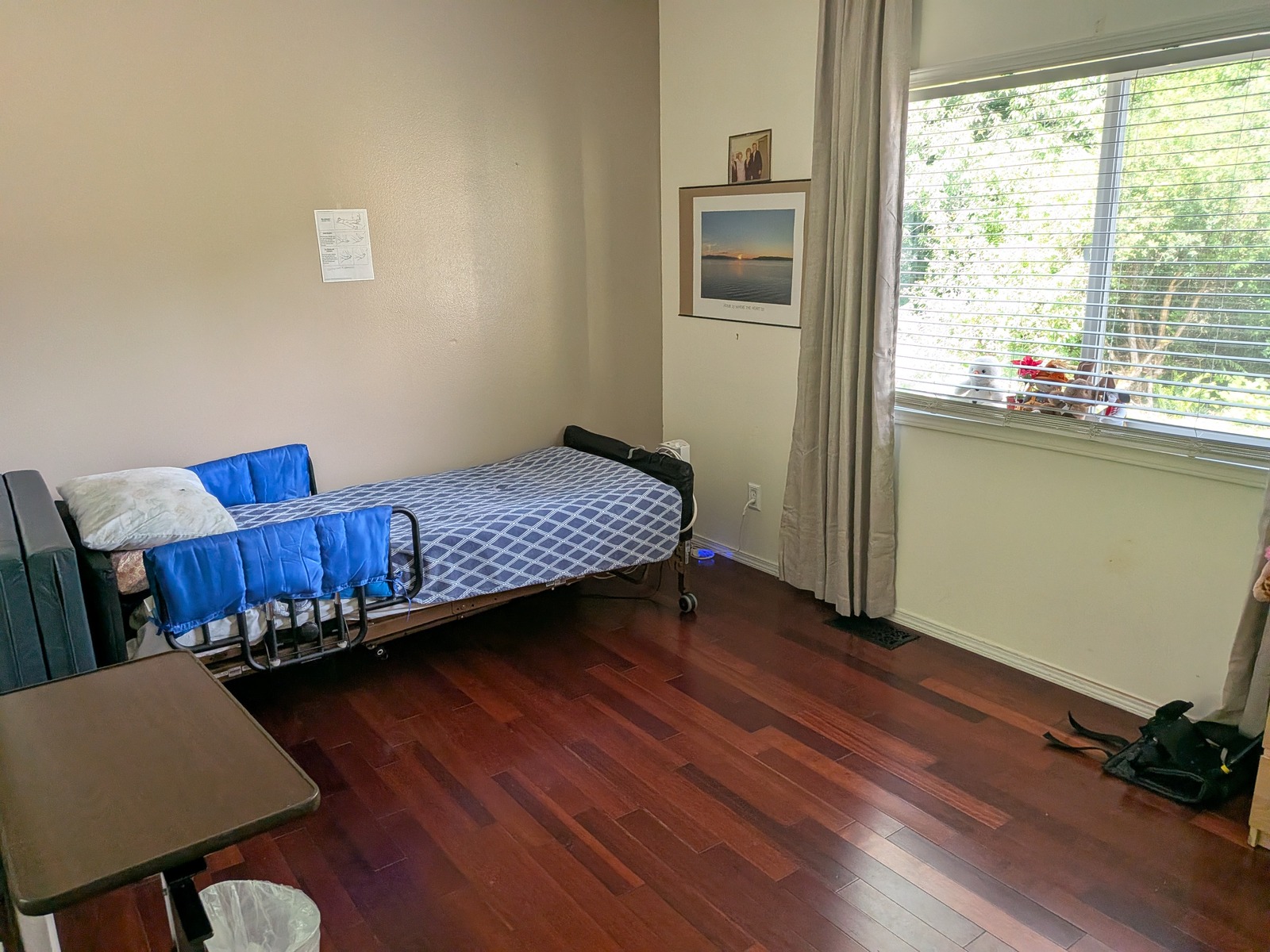
When you've recognized the signs and had the conversation, the next step is understanding your options. For families who need more than in-home care but less than a skilled nursing facility, Washington State offers a middle path: the adult family home, a licensed residential care home for up to six adults in an ordinary house. Regulated by DSHS under RCW 70.128, these homes provide 24-hour supervision, meals, personal care, and medical support in a real home. If you're weighing settings, our adult family home vs. assisted living comparison walks through the differences in detail.
Not all adult family homes are the same, and the differences matter most when medical needs are complex. Edmonds Villa in Edmonds, Washington, is an RN-owned and operated high-acuity adult family home — a home where clinical decisions are made by someone with direct medical accountability. We're equipped to manage complex conditions that most care homes cannot, including Parkinson's and neurological conditions, dialysis support, G-tube and J-tube feeding, bariatric care, and oncology symptom management. Because we're licensed for only six residents, every medication schedule is tracked precisely and every care plan reflects the actual person — not a diagnosis category. For a full picture of what we provide, see our services page.
Practical next steps: document the risks you're observing, talk to your loved one's doctor, and verify any home's DSHS license using the DSHS Residential Care Facility Search tool. Edmonds Villa holds DSHS license #758617 and welcomes you to verify our standing directly. Then tour. Most families tell us that seeing a home in person is what finally makes the decision feel possible — and that the relief of knowing their loved one is safe around the clock is greater than any guilt they expected to feel.
Frequently Asked Questions
How do I know when it's time to move my parent to residential care?
It's usually time when the care they need exceeds what family members and hired in-home caregivers can safely provide — for example, round-the-clock supervision, a complex medication schedule, or repeated falls. A good test is to count the gaps: the moments each day when no one is available to help. When those gaps create genuine risk, residential care becomes worth serious consideration.
What are the early signs that home care is no longer enough?
Early signs include missed or double-dosed medications, new bruises from falls, unexplained weight loss or dehydration, increased confusion or wandering, and a caregiver who is exhausted or unwell. When several of these appear together, it's a sign the care plan needs to change — not a failure on anyone's part.
My loved one resists the idea of moving. How do I start the conversation?
Start with the specific things you've noticed — a missed medication, a fall, weight loss — rather than a broad conversation about moving. Frame it as a problem you're solving together, and involve their doctor, who can make an objective recommendation. Focus on what they'll gain: safety, regular meals, and people around the clock.
What is an adult family home, and how does it differ from home care?
An adult family home is a licensed residential home where up to six adults receive 24-hour supervision, meals, personal care, and medical support in a real house. Unlike in-home care, help is available around the clock without scheduling gaps or reliance on a single caregiver. In Washington State, these homes are licensed and inspected by DSHS under RCW 70.128.
How does residential care cost compare to 24-hour home care in Washington?
Adult family homes in Washington typically range from $4,500 to $9,000 per month depending on care level and location. Round-the-clock in-home care is often more expensive, since you pay per caregiver hour across three daily shifts. Payment options include private pay, the COPES Medicaid waiver, VA Aid and Attendance, and long-term care insurance.
Can an adult family home manage complex medical needs?
Many can't, but high-acuity adult family homes like Edmonds Villa are RN-owned and operated and equipped to manage complex conditions including Parkinson's disease, dialysis support, tube feeding, bariatric care, and neurological conditions. That's why it's essential to match a home's actual clinical capabilities to your loved one's needs rather than choosing by setting alone.
What should I do first if I think my parent needs more care?
Start by documenting the specific risks you're observing — medication errors, falls, weight change, missed meals — then have an honest conversation with their primary care doctor and your family. If residential care looks right, verify DSHS licensing, review recent inspection reports, and tour homes that match your loved one's care level before making a decision.
Recognizing the Signs Is the First Act of Care
Deciding that home care is no longer enough is rarely a moment of clarity — it's an accumulation of small signals that eventually become impossible to ignore. Missed medications. A fall. An empty pantry. A caregiver who can't keep going. None of these make you a failed caregiver. They are evidence that your loved one's needs have grown, which is a normal part of aging and illness, not a personal shortcoming.
What matters is what you do with the recognition. Measure the gaps honestly, use the thresholds above as your guide, and know that residential care — especially the warm, six-resident, RN-supervised setting of an adult family home — can provide the round-the-clock safety and companionship that family care alone increasingly cannot. You don't have to make this decision in isolation. Reach out, ask the questions, tour a home, and let yourself consider that changing the setting might be the most loving thing you can do.