Every care search begins with a person, and for some families it begins with a harder version of the usual question. Your loved one needs real, daily care — but they also have a larger body, and you've already heard the words that close so many doors: "we're not equipped," "we don't have the space," "our staff isn't trained for that." The search isn't just about finding help. It's about finding help that can say yes safely, comfortably, and without a single moment of shame.
A bariatric care home is the answer to that specific search. It is a residential care home that has gone beyond standard personal care to be physically and clinically prepared for residents with higher-weight bodies — the equipment, the trained staff, the accessible spaces, and the daily protocols that make safe, dignified care possible. For families in Washington State, this usually means a licensed adult family home that has made bariatric care an intentional capability rather than an afterthought.
This article explains what a bariatric care home is, what it should offer across every part of daily life — from the bed a person sleeps in to the way they're lifted, fed, and treated with respect — and what families should verify before committing. Further along? Our guide to finding a care home for a loved one with obesity-related medical needs walks through the full process step by step.
What Is a Bariatric Care Home?
There is no special license in Washington State that says "bariatric care home" on it. The term describes a capability, not a category. Under Washington law, the homes that provide this care are adult family homes — licensed by the Department of Social and Health Services (DSHS) under RCW 70.128, caring for up to six residents in an ordinary residential house. A bariatric care home is an adult family home that has deliberately invested in the equipment, environment, and training needed to serve residents with higher-weight bodies safely and well.
That distinction matters, because most adult family homes are not bariatric care homes. A standard home can provide excellent personal care and still lack a bed rated for a resident's weight, a lift that can handle a safe transfer, a bathroom wide enough for a wheelchair and a caregiver, or staff trained in the specific techniques bariatric transfers require. When a family hears "we're not equipped," they are usually hearing an honest description of a home that chose not to build this capability.
Because obesity affects well over 40% of American adults and often travels with complex health conditions, bariatric care in a residential setting is a meaningful, growing need — and one that high-acuity homes have begun to meet. An RN-owned home like Edmonds Villa in Edmonds, Washington, pairs bariatric equipment and trained staff with the nursing oversight needed to manage the conditions that frequently accompany higher-weight bodies. New to the model itself? Our guide to adult family homes covers the basics; this article focuses on what bariatric care requires.
The Equipment a Bariatric Care Home Should Have
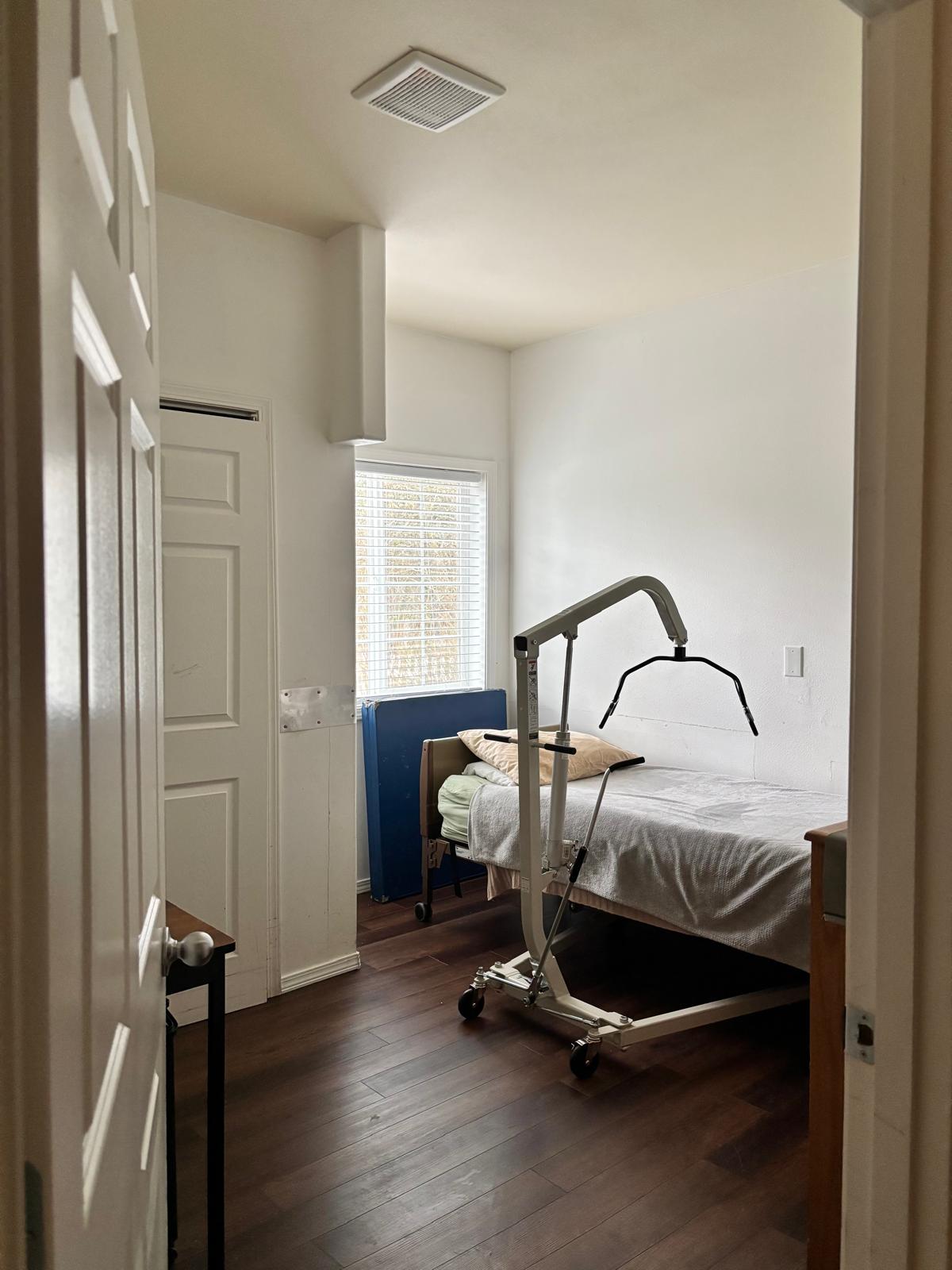
Equipment is the most visible test of whether a home can genuinely provide bariatric care. A bariatric care home should have, at minimum:
Bariatric-rated beds
The bed is where a resident spends more hours than anywhere else, so its limits matter. Bariatric beds are built with a higher weight capacity, a wider surface, and a mattress designed to distribute pressure across the body. Height adjustment and supportive side rails make a practical difference for residents and caregivers alike.
Mechanical lifts and transfer equipment
Safe movement is the heart of bariatric care, and it cannot be done by strength alone. A properly equipped home has mechanical patient lifts — rated for the weights it serves — to move a resident from bed to chair, chair to shower, or onto a commode. Slide boards, transfer sheets, and air-assisted devices support repositioning in bed. Seeing this equipment actually in use is a strong signal that transfers are handled safely rather than by manual lifting that endangers resident and caregiver alike.
Reinforced bathrooms with grab bars
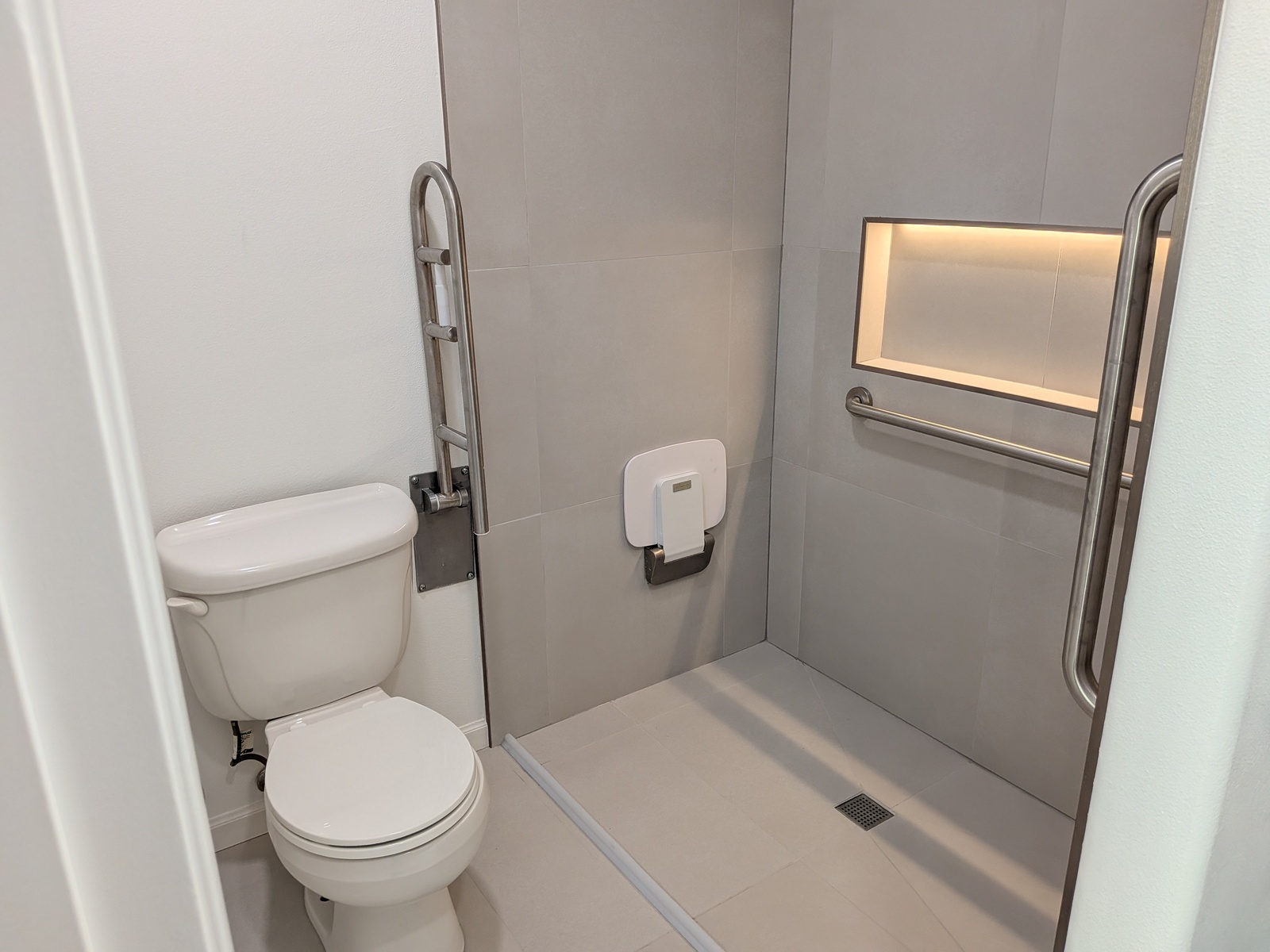
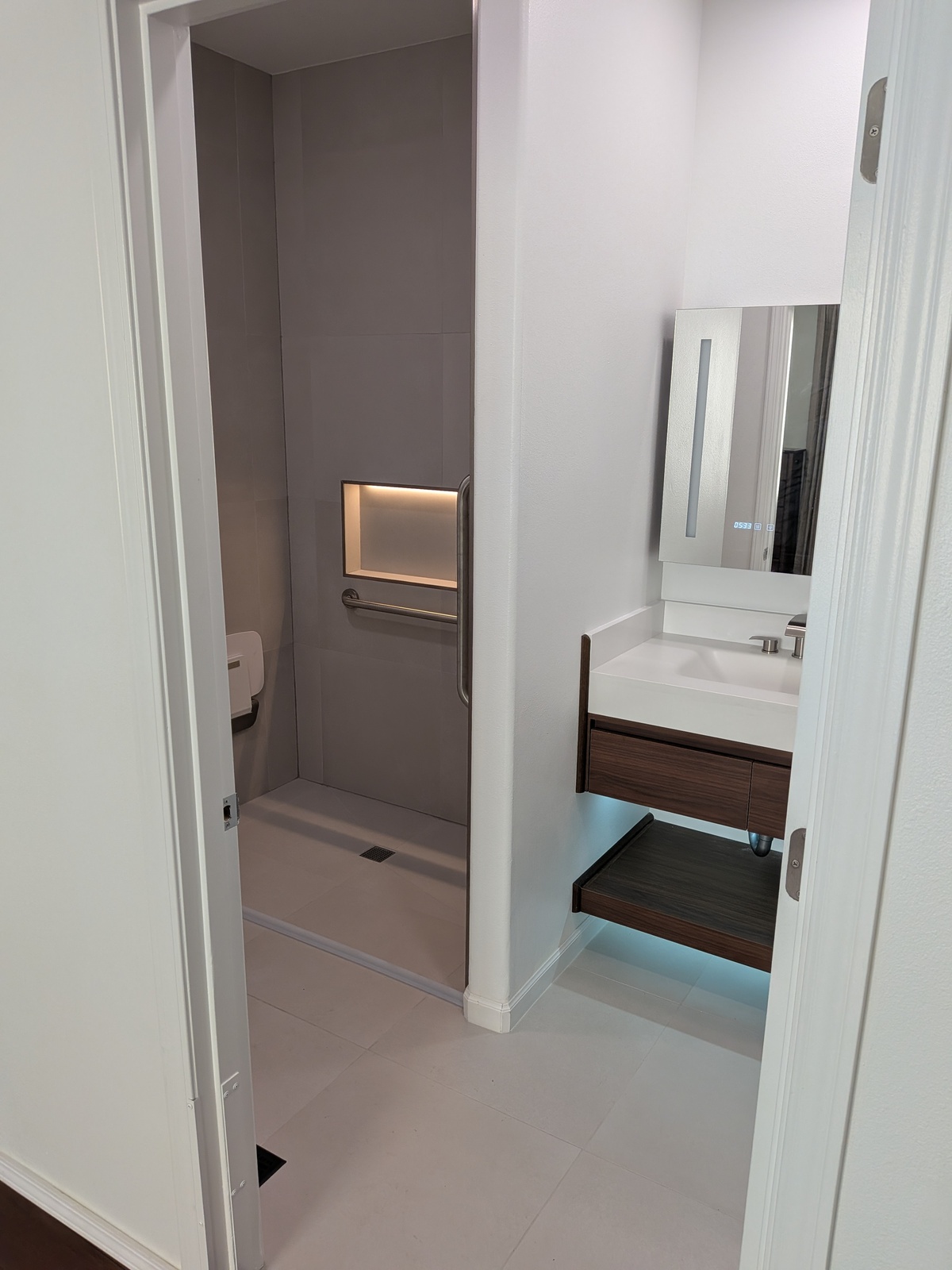
Bathrooms are where many bariatric care plans succeed or fail. The ideal setup includes a walk-in or roll-in shower with a shower seat, grab bars mounted where they can actually support weight, a reinforced commode, and enough clear floor space for a lift and two caregivers. Doorways and hallways must be wide enough for a bariatric wheelchair to pass without scraping. Reinforced seating in common areas matters too — a resident should be able to sit with family in the living room, not only in their bedroom.
Bariatric wheelchairs, walkers, and commodes are built to different weight limits than standard equipment. Keeping the right aids on site lets residents move around the house and attend appointments rather than being confined to a room.
Trained Staff and the Safety of Every Transfer
Equipment is only half the story. The most capable lift is useless — and dangerous — in hands that haven't been trained to use it. The American Nurses Association has long emphasized that safe patient handling is essential to prevent injuries to residents and caregivers alike. A bariatric care home should be able to show you that its staff are trained in:
- Safe transfer techniques — how to move a resident from bed to chair, chair to commode, and back, using lifts and assists correctly every time
- Equipment proficiency — knowing the weight ratings and the safe operating steps for every bed, lift, and mobility aid in the home
- Repositioning — the regular, scheduled movements that protect skin and prevent pressure injuries during long hours in bed
- Teamwork — knowing when a transfer needs two people, and communicating clearly so the resident never feels rushed or unbalanced
- Sensitivity — providing personal care with respect and privacy, focused on the person rather than their size
Staffing ratios matter as much as training. Ask how many caregivers are on duty during the day and overnight, and how many residents each supports. At a six-resident scale, an RN-owned home like Edmonds Villa provides the consistent attention a bariatric resident needs — plus the nursing oversight that coordinates transfers, skin care, medication, and physician communication under one accountable care plan.
Do you have a loved one who needs bariatric care? Edmonds Villa is an RN-owned adult family home equipped with bariatric beds, lift systems, and trained staff. Learn more about our bariatric care services or contact us to discuss your family's needs.
Skin, Pressure, and Wound Care Considerations
For a resident with higher body weight, skin is where small problems become serious ones fast. Reduced mobility means more time in one position, heavier weight means more pressure where skin meets mattress or chair, and moisture can compound both. Together these raise the risk of pressure injuries — wounds that are painful, slow to heal, and harder to manage in a larger body.
A bariatric care home should approach this risk systematically:
- Pressure-redistributing surfaces — mattresses, overlays, and cushions designed to spread weight and relieve high-pressure areas
- A repositioning schedule — turning and repositioning on a regular, documented rhythm rather than "as needed"
- Daily skin checks — looking for early redness, warmth, or breakdown before it becomes a wound
- Prompt wound care — nursing attention to any breakdown, with a plan that involves the resident's physician
- Incontinent care — thorough, timely cleaning and drying that keeps skin healthy
In a home with RN oversight, skin integrity monitoring is part of the daily routine, and early changes trigger a response instead of waiting until a problem is visible to the family.
Nutrition and Hydration Planning That Fits the Person
Bariatric care is not about putting a resident on a diet. It is about planning food and fluids around the whole person — their medical conditions, their preferences, and their dignity. Weight loss isn't the goal of residential care; safety, health, and quality of life are. A bariatric resident may also be managing diabetes, heart disease, or healing from a recent bariatric surgery — each of which shapes what "good nutrition" means day to day.
What families should expect from a bariatric care home:
- Individualized meals — menus that account for medical needs while honoring personal taste and cultural preferences
- Consistent hydration — fluid intake tracked and encouraged, especially when medication or conditions make dehydration a risk
- Coordination with the care team — input from a registered dietitian, physician, or the resident's own providers where needed
- Encouragement of mobility — gentle activity woven into daily life to the extent that is safe and appropriate
Home-cooked meals around a shared table are part of what makes residential care feel like home — and a bariatric care home should offer that warmth without singling anyone out.
Fall Prevention When a Fall Is More Serious
Falls are a risk in any senior care setting, but for a bariatric resident the stakes are higher. Mobility limitations can be more pronounced, the mechanics of a fall are harder on the body, and getting a person safely back up after a fall requires lift equipment and trained hands. Preventing falls is therefore a cornerstone of responsible bariatric care.
A bariatric care home should have a genuine fall-prevention plan:
- Fall risk assessment at admission — identifying balance, strength, and medication factors before they become incidents
- Clear, wide pathways — clutter-free routes from bed to bathroom to common areas, with grab bars where they help
- The right mobility device — a walker, wheelchair, or rollator rated for the resident's size, not the nearest available model
- Transfer support that's never rushed — staff who wait, assist, and stabilize rather than hurrying a resident across a room
- Night monitoring — attention during the highest-risk hours, when residents try to get up alone
- Strength and balance work — coordination with physical therapy or exercise programming where appropriate
Dignity and Respect: The Care Around the Equipment
Many bariatric residents have experienced stigma in healthcare settings — equipment that didn't fit, chairs they couldn't use, comments that reduced them to their weight. A bariatric care home must be a place where that stops. The physical capability matters, but the culture around it matters equally.
Dignity in bariatric care looks like:
- Privacy during personal care — doors closed, bodies covered, and adequate time so care is never rushed
- Respectful communication — care discussions focused on needs and preferences, never on body size
- Appropriate seating and spaces — chairs, beds, and bathrooms that fit, so a resident can participate in daily life rather than being excluded by it
- Clothing and supplies that fit — dignity begins with the small things
- A care plan that reflects the person — their routines, preferences, and goals, not just their diagnosis
At Edmonds Villa, bariatric care is designed around exactly this principle: equipment and training in service of a dignified, person-centered life — not the other way around.
What Families Should Verify When Touring
Touring is where the reality of a home's bariatric capabilities becomes visible — or conspicuously absent. Beyond the general adult family home checks, bariatric-specific questions are essential.
Questions to ask on every bariatric care tour
- Weight capacity. What weight ratings do the beds and lifts carry, and do they comfortably exceed your loved one's needs? Vague answers here are a red flag.
- Training. How are staff trained in lift equipment and safe transfer techniques, and who refreshes that training?
- Access. Will a bariatric wheelchair fit through the doorways and into the bathroom? Is there room for a lift and two caregivers in the bathroom?
- Skin and repositioning. What is the repositioning schedule, and how are skin checks documented?
- Staffing. How many caregivers are on duty during the day and overnight, and how many residents do they support?
- Experience. Has the home cared for bariatric residents before, and what does that look like day to day?
- Emergencies. If your loved one fell, what exactly would happen — who responds, what equipment is used, who is called?
Red flags that should stop the process
No lift equipment on site, or a reliance on manual lifting. A bed or bathroom clearly too small for a resident's needs. Staff who can't describe their transfer training. Hesitation when you ask about weight capacity. Any home that makes you feel your loved one is "too much" to accommodate is not one where dignity is the priority.
Finally, do the paperwork checks that apply to every Washington adult family home. Verify the DSHS license number through the Residential Care Facility Search tool, and read the last two inspection reports. Ask directly about cost — bariatric care can carry additional equipment and care needs, and pricing should be transparent from the first conversation. For more on the broader financial and clinical picture, including the COPES Medicaid waiver, VA Aid and Attendance, and the typical $4,500–$9,000 monthly range for adult family homes in Washington, see our guide to high-acuity care.
Frequently Asked Questions
What is a bariatric care home?
A bariatric care home is a residential care home that is equipped and staffed to safely and comfortably care for people with higher-weight bodies and obesity-related medical needs. In Washington State, it is a licensed adult family home (up to six residents) that has gone beyond standard personal care to provide bariatric-rated beds, lift equipment, accessible bathrooms, and caregivers trained in safe transfer techniques.
How is bariatric care different from standard care in an adult family home?
Standard personal care homes may lack the equipment, space, and training to safely support larger residents. A bariatric care home adds specialized equipment with higher weight capacities, caregivers trained in safe patient handling and lift operation, reinforced bathrooms and doorways, skin and pressure monitoring, and individualized nutrition planning — all coordinated under nursing oversight.
What equipment should a bariatric care home have?
Look for bariatric-rated beds with appropriate weight capacity and width, mechanical patient lifts, transfer equipment, reinforced seating and commodes, widened doorways, and accessible bathrooms with grab bars, shower seats, and enough space for a lift and caregivers. Equipment should be matched to the resident's actual size and needs.
Why are skin and pressure concerns more serious for bariatric residents?
Higher body weight, reduced mobility, and increased moisture can combine to raise the risk of pressure injuries. A bariatric care home should respond with pressure-redistributing mattresses, regular repositioning, daily skin checks, and prompt attention to early redness or breakdown, all documented in the care plan.
What should I ask when touring a bariatric care home?
Ask about the weight capacity of beds and lifts, whether staff are trained in lift equipment and safe transfer techniques, caregiver-to-resident ratios during the day and overnight, how skin and falls are monitored, and whether the bathroom and doorways can accommodate your loved one's equipment. Verify the DSHS license and read the last two inspection reports.
Can Edmonds Villa care for a bariatric resident?
Yes. Edmonds Villa is an RN-owned, DSHS-licensed adult family home in Edmonds, WA, equipped with bariatric beds, lift equipment for safe transfers, reinforced furniture, widened doorways, and accessible bathrooms, with caregivers trained in bariatric care techniques and sensitivity. Care is individualized around each resident's needs and goals.
A Bariatric Care Home Should Feel Like Yes
When a loved one has a larger body and complex medical needs, the care search is not just about finding a place with an open bed. It's about finding a home that can say yes — to the equipment, to the training, to the dignified daily care — and mean it. A bariatric care home should be evident the moment you walk in: the right beds and lifts in use, the bathrooms that fit, the staff who speak about residents with respect.
You don't have to accept "we're not equipped" as the end of the search. Homes like Edmonds Villa have made bariatric care a genuine capability, and they're worth finding. Verify the license, read the inspections, ask the questions in this article, and trust what you see on the tour. When a home is genuinely prepared for your loved one, you'll feel it — in the details, and in the welcome.