When your parent or spouse lives with obesity and a serious medical condition on top of it, the search for care feels urgent and deeply personal. You begin with a simple question — who can actually help? — and run into a discouraging pattern. Assisted living says it isn't equipped. A nursing facility feels like giving up on a normal life. And managing transfers, medications, and daily care at home has become more than one family can safely handle. You are not looking for a facility. You are looking for an obesity care facility that will treat your loved one as a person.
This guide is for adult children and spouses researching a care home for a loved one with obesity-related medical needs. It covers assessing mobility and medical needs, the bariatric equipment and safety protocols that matter, why transfer training protects residents and caregivers, dignity, wound and skin care, nutrition without stigma, and how to tell a genuinely equipped home from one that merely says it is — plus Washington State options.
New to the care landscape? An adult family home is a DSHS-licensed residential care home in an ordinary house, limited to six residents, where a small care team provides daily assistance and supervision. For a fuller comparison, see our adult family home vs. assisted living guide and residential care options overview. This article focuses on the bariatric question: what must be true of the home, the equipment, and the people before your loved one moves in.
Start with an Honest Assessment of Mobility and Medical Needs
Before evaluating a care home, you need a clear picture of what your loved one's body requires day to day. Weight is only one factor — what matters is the combination of weight, mobility, skin condition, and the conditions that often travel with obesity: diabetes, heart disease, COPD, sleep apnea, arthritis, and limited circulation. According to the Centers for Disease Control and Prevention (CDC), over 40% of American adults live with obesity, yet many care settings lack the equipment, space, and training to serve this population safely and with dignity.
Work through these questions with your loved one's primary care provider before you tour anything:
- Can they bear weight? Can they stand and pivot with one person assisting, or are they fully dependent for transfers?
- What mobility aids do they use? A walker, a standard wheelchair, or a bariatric wheelchair? This determines whether the home's doorways and bathroom fit.
- How often do they need repositioning? Residents with limited mobility need scheduled repositioning day and night to protect their skin.
- What medical conditions need daily management? Diabetes and complex metabolic conditions require medication timing and monitoring; cardiovascular and pulmonary conditions may need oxygen or careful monitoring.
- Are there existing skin or wound concerns? Pressure injuries, poor circulation, or skin folds that need daily attention change the level of care required.
- What is the caregiving reality at home today? How many people does it take to move your loved one safely? That tells you the minimum the home must provide with staff and mechanical equipment.
This assessment becomes your checklist. Every home either meets these needs or it doesn't. For a structured way to track across tours, use our ultimate adult family home checklist for families.
What an Obesity Care Facility Needs to Actually Have
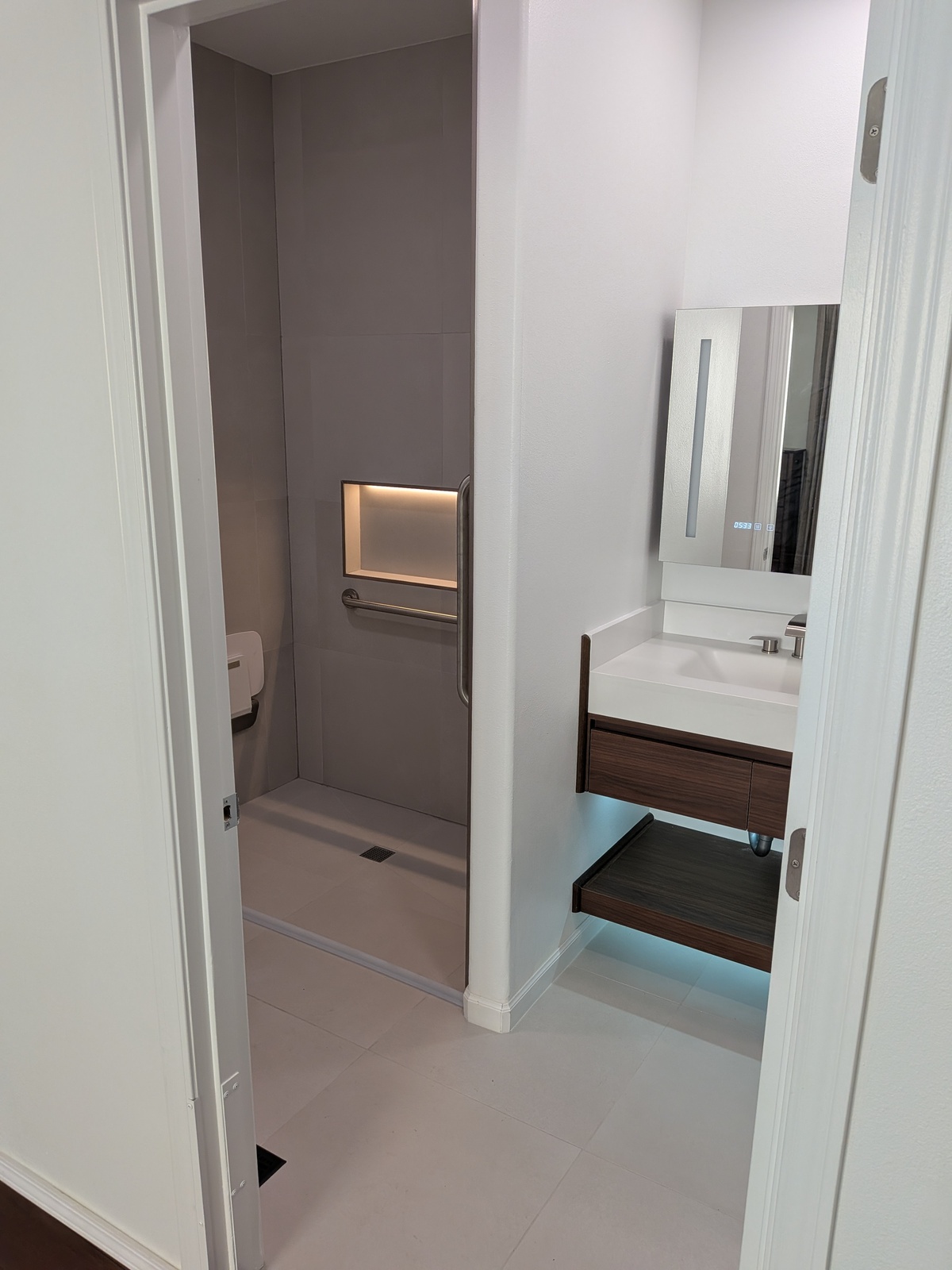
There's a difference between a home that accepts larger residents and one that is equipped for them — the equipment list is the difference between a safe placement and a dangerous one. When you visit, ask to see, and where possible touch, the following:
- Bariatric beds. Beds rated for higher weight capacity and appropriate width, so your loved one sleeps comfortably and can be repositioned safely day and night.
- Mechanical lift equipment. Lifts rated for bariatric weights so transfers don't rely on manual lifting — the single most important safety feature for residents and staff.
- Reinforced furniture. Chairs and seating in common areas rated to support residents safely, so your loved one can join meals and activities.
- Widened doorways. Doorways throughout the home that let a bariatric wheelchair and a lift pass without restriction.
- Accessible bathrooms. Roll-in showers, reinforced fixtures, shower seats, grab bars, and enough clear floor space for a wheelchair and caregiver to work together.
- Bariatric mobility aids. Wheelchairs and aids sized appropriately, so outings and appointments remain possible.
At Edmonds Villa, these capabilities are part of the home's bariatric care program, not an afterthought — the result of an intentional decision to serve residents who are often turned away elsewhere. Ask any home whether its equipment has certified weight ratings, and whether the bathroom you're looking at is the one your loved one will actually use.
Safe Transfers: Protecting Residents and Caregivers Alike
Transfers — bed to wheelchair, wheelchair to toilet, toilet to shower — are the highest-risk moments in any care setting, and the risk is magnified for a resident who needs bariatric equipment. The professional standard, emphasized by the American Nurses Association, is safe patient handling: mechanical equipment and proper technique instead of manual lifting.
Why does caregiver safety matter to your family? A caregiver injured during a transfer is absent tomorrow — an understaffed shift is a risk to every resident. A home that invests in lifts and trains staff is protecting residents and its team; that stability is part of what you're paying for.
When you tour, ask directly:
- How are caregivers trained on lift equipment, and how often is training repeated?
- Can they demonstrate a bed-to-wheelchair transfer with the actual equipment?
- How many staff are involved in transfers, day and night, and what is the overnight ratio when most repositioning happens?
Edmonds Villa's caregivers receive specialized training in bariatric transfer techniques and proper use of lift equipment, following evidence-based protocols that protect residents and staff. A home that answers with specifics rather than reassurance has thought through the scenarios that matter.
Dignity Is a Clinical Issue, Not a Courtesy

Many people who live with obesity have experienced stigma in healthcare — weighed in hallways, spoken about rather than spoken to. Dignity is not a soft topic you get to after the medical ones; it is a clinical consideration with real consequences. A resident who feels ashamed during personal care is more likely to withdraw, refuse care, or lose the motivation to participate in daily life.
Dignified bariatric care looks like specific, observable things:
- Respectful communication that focuses on care needs and preferences, never on body size or weight.
- Privacy during personal care, with appropriate time allowed so nothing is rushed.
- Clothing that fits and is easy to manage, so residents aren't left exposed in gowns.
- Seating in common areas that supports them comfortably, so they can join meals and conversation.
Edmonds Villa provides sensitivity training for all staff so interactions are respectful and person-centered, and care plans address each resident's abilities and goals. On a tour, notice not just what staff say to you, but how they speak to and handle residents. That observation tells you more than any brochure.
Searching for an obesity care facility that is truly equipped? Edmonds Villa is an RN-owned, DSHS-licensed high-acuity adult family home in Edmonds, WA, with bariatric beds, lift equipment, widened doorways, accessible bathrooms, and staff trained in safe, dignified transfer techniques. Contact us to discuss your loved one's specific needs.
Skin, Wound, and Pressure Injury Care
Residents with limited mobility and higher body weight face an elevated risk of pressure injuries — skin and tissue damage from prolonged pressure. They are painful, dangerous, and often preventable, and they're one of the clearest signals of whether a home understands bariatric needs.
Ask every home how it prevents and monitors pressure injuries:
- Is there a scheduled repositioning routine, day and night?
- Who checks the skin daily, and what are they looking for?
- What happens at the first sign of redness or skin breakdown?
- Are there special pressure-relieving mattresses or support surfaces?
- How is wound care coordinated with nursing and the resident's provider?
Proper skin care also includes gentle cleansing and drying of skin folds, regular inspection, moisture management, and padding during transfers. At Edmonds Villa, staff place special attention on skin integrity to prevent pressure injuries — a particular concern for residents who require frequent repositioning. Homes that pair this with nursing oversight are treating skin care as the clinical discipline it is; homes that wave it off as "we handle all that" may have no plan at all.
Nutrition That Meets Medical Needs Without Shame
Nutrition for a resident with obesity-related medical needs is a balance, not a punishment. Diabetes may require careful carbohydrate management; heart disease may mean sodium limits; respiratory conditions are affected by meal size and timing. But a home that treats every meal as an exercise in restriction, or lectures a resident about weight, will do more harm than good.
A good care home provides nutritious meals that respect medical needs and personal preferences while preserving enjoyment and social connection — and never uses food as a source of shame.
At Edmonds Villa, meals are home-cooked and nutritional support balances health goals with quality of life. Residents eat together, and care plans adjust for diabetes, cardiac, and other conditions without making the dining table a source of anxiety.
Questions to Ask on a Tour — and Red Flags to Trust
By now you have a working checklist. Here's how to put it to work on a tour, along with the warning signs that should stop a decision in its tracks.
Questions worth asking on every tour
- What is the certified weight rating of your beds, lifts, and seating?
- Which rooms have widened doorways, and does the bathroom in use have a roll-in shower, grab bars, and a shower seat?
- How many staff are on duty day and overnight, and how are transfers handled?
- What is your repositioning and skin-check routine for residents with limited mobility?
- Who holds the DSHS license, and how are care plans developed and updated?
- How do you coordinate with the resident's provider and any specialists?
Red flags that should end the conversation
- The home cannot produce a current DSHS license number immediately.
- Staff cannot describe how they perform a transfer or use lift equipment.
- The bathroom in use is narrow, has no grab bars or shower seat, or can't fit a wheelchair and caregiver.
- Vague answers about overnight staffing or repositioning.
- Residents with mobility needs appear confined to bedrooms.
- Staff speak about residents' weight dismissively or make assumptions about what residents can do.
- A pattern of enforcement actions in the DSHS inspection history without documented corrective steps.
A home that answers with specifics and without defensiveness is building trust. A home that cannot describe how it would handle a scenario involving your loved one hasn't thought that scenario through.
Finding an Obesity Care Facility in Washington State
Washington State offers genuine options for families seeking an obesity care facility — if you know where to look. Licensed adult family homes are regulated by DSHS under RCW 70.128, limited to six residents, and inspected roughly every 15 months. Providers complete 75 hours of basic training plus a 48-hour administrator course before accepting residents. Use the DSHS Residential Care Facility Search tool to confirm license status and review inspection history before any tour.
The challenge is that most adult family homes — and most assisted living communities — are not set up for bariatric care. That's why homes like Edmonds Villa, an RN-owned high-acuity adult family home in Edmonds, matter: RN ownership means clinical decisions are made by someone with direct medical accountability, and the home's capabilities extend to bariatric care, complex metabolic conditions, cardiovascular and pulmonary conditions, wound care, and more. For a deeper look at what a proper bariatric program should offer, see our guide to bariatric care homes.
Cost is a real consideration. In Washington State, adult family home care typically ranges from $4,500 to $9,000 per month, with RN supervision, specialized equipment, and trained staff for high-acuity conditions at the higher end. Payment options include private pay, the COPES Medicaid waiver and Community First Choice (CFC) program, VA Aid and Attendance for veterans and their spouses, and long-term care insurance. Consult a benefits counselor before ruling any option out.
Finally, trust what you see. An obesity care facility that is genuinely equipped looks different from one that merely claims to be — wider doorways, visible lifts, bathrooms you could safely use with your loved one, and residents of all sizes in common areas. If a home is truly ready, you'll be able to tell. If it isn't, no amount of reassurance changes what the building makes obvious.
Frequently Asked Questions
What does 'obesity care facility' mean?
An obesity care facility is a care home equipped and staffed to safely support residents with obesity and related medical needs — bariatric-rated beds and lifts, widened doorways, accessible bathrooms, and staff trained in safe transfers, skin care, and dignified assistance. In Washington State, some adult family homes like Edmonds Villa offer this level of bariatric care in a small residential setting.
Can an adult family home accommodate a resident who needs bariatric care?
Yes, if the home has invested in the right equipment and training. At Edmonds Villa, a DSHS-licensed, RN-owned adult family home in Edmonds, WA, this includes bariatric beds rated for higher weight capacities, mechanical lift equipment, reinforced furniture, widened doorways, and accessible bathrooms. Staff are trained in bariatric transfer techniques that protect both residents and caregivers.
How do caregivers prevent injuries during transfers for residents with higher body weight?
Homes use mechanical lift equipment and evidence-based transfer techniques rather than manual lifting. Caregivers receive specialized training in using lifts, repositioning safely, and supporting mobility so that neither the resident nor the staff member is put at risk. Ask to see the equipment and how staff are trained on it during your tour.
What should I look for in a bathroom when touring a bariatric care home?
Look for roll-in showers, reinforced fixtures, shower seats or benches, grab bars, and enough clear floor space for a wheelchair and a caregiver to work safely together. Widened doorways throughout the home are equally important so bariatric wheelchairs and lifts can pass freely.
Does Medicaid or VA Aid & Attendance help pay for bariatric care in Washington?
Washington State's COPES Medicaid waiver can cover personal care services for qualifying residents, and the Community First Choice (CFC) program offers similar coverage. Veterans and their spouses may qualify for VA Aid and Attendance. Room and board is typically paid separately, often through monthly income. Eligibility depends on financial and functional need.
How do I verify a Washington care home is licensed to provide bariatric care?
Use the DSHS Residential Care Facility Search tool to confirm active license status and review inspection reports. A licensed adult family home must be able to produce its DSHS license number immediately. Then ask directly about bariatric equipment weight ratings and staff training — a home that cannot answer specifically may not be equipped for your loved one's needs.
Finding the Right Home Starts with Knowing What to Look For
Choosing a care home for a loved one with obesity-related medical needs is one of the most consequential decisions a family makes — and the search is harder because so few settings are genuinely equipped. The path forward is concrete: assess your loved one's real needs with their provider, verify bariatric equipment and weight ratings, confirm staff training on safe transfers, and watch how dignity and skin care are actually practiced, not just described.
The home you're looking for exists — properly equipped, properly trained, and person-centered enough that your loved one can live with safety and dignity. Edmonds Villa was built with exactly this population in mind. If you'd like to see a truly equipped bariatric care home, we'd be honored to show you around.